
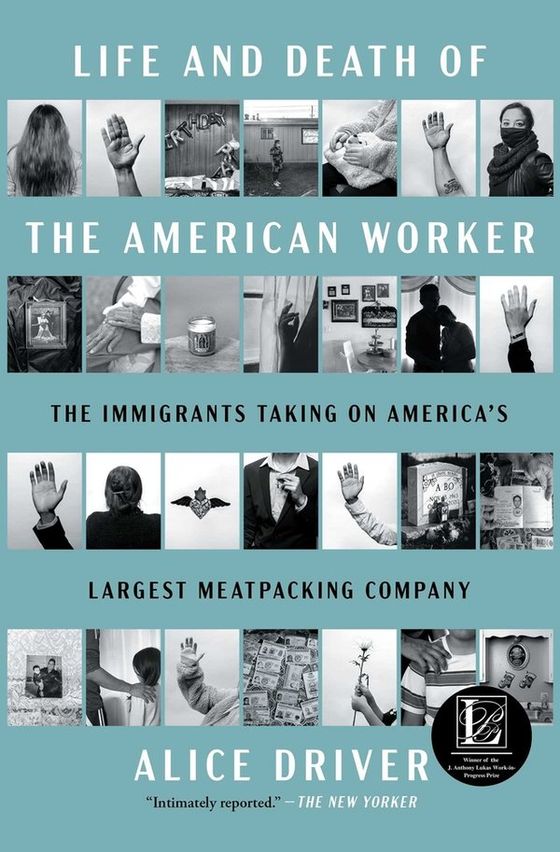
Life and Death of the American Worker: The Immigrants Taking on America's Largest Meatpacking Company
by Alice Driver
Cheap chicken has a body count.
For you if
you want to know who dies so the food system stays cheap.
⚡ Choose Your Route ⚡
Not sold directly on this site. Support indie bookstores with a new copy, or go sustainable with a used one.
Buy New on Bookshop.orgSupports independent bookstores
— OR —
Find Used on Better World BooksSecondhand & sustainable
$19 MSRP · Paperback
Reference price shown. Other editions may be available.
In June 2011, a chemical spill at Tyson's chicken processing plant in Springdale, Arkansas, sent workers running from the floor, eyes burning, lungs seizing. Supervisors told them to get back on the line. Alice Driver, a journalist from the Ozark Mountains, spent years earning the trust of those workers — Salvadoran immigrants, mostly, who spoke only Spanish, some unable to read, living in the shadow of the largest meatpacking company in America. When COVID-19 arrived at the plant, they kept working. Coworkers died. The workers who'd survived 2011 organized with Venceremos, traveled to Florida to learn from the Coalition of Immokalee Workers, and filed a class action lawsuit against Tyson. They lost. Driver put that ending in the book anyway. This is journalism as the act of not looking away — from what the industrial food system costs, from what American companies do to the workers they can most easily disappear, from the specific human price of a country that decided cheap chicken was worth more than the people who process it.
Where This Book Lives
- Setting
- North America
- Voice
- Written by a North America author
Alice Driver grew up in the Ozark Mountains, a few counties over from Tyson's headquarters — this is not a journalist parachuting into someone else's story. She spent years building trust with workers who had every reason to stay silent, and this book is the result. Tyson's PR department contacted her editors demanding corrections after publication; she maintained every word. What makes this irreplaceable: Driver never lets you forget that the food system's cheapness is underwritten by specific people — Placido, who died of COVID-19 after the 2011 chemical spill had already damaged his lungs; Angelina, who organized anyway. The lawsuit was lost. Driver put that ending in the book. So should you read it.
Part of a Reading Journey


Related Viewing
Shares a topic, theme, or setting with this book in the catalog.
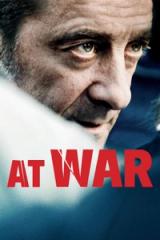
At War / En guerre(2018)
dir. Stéphane Brizé
Same event: Labor Movement · Same theme: Labor Exploitation
The plant is profitable. It closes anyway.
Laurent Amédéo leads 1,100 workers at the Perrin plant — a facility that is profitable, whose multinational parent company has decided to close anyway. Stéphane Brizé shoots En guerre with the grain and rhythm of a documentary: non-professional actors in most roles, a handheld camera that can't find a comfortable distance, meetings that go nowhere for a very long time. Vincent Lindon is the union spokesperson who has to translate collective fury into procedure and back again, day after day. The film covers one stretch of a fight that most films would compress into a montage — the press conferences, the back-channel negotiations, the vote counts, the waiting.
Why it’s here: Brizé makes you sit in the room where a decision is being made about other people's lives by people who will never meet them. What's punk about En guerre is the refusal to let that feel abstract — the camera stays at plant-gate level, in the meeting room, on Laurent's face when the call comes in. What's pedagogical is the film's insistence on duration: you feel what it costs to keep a collective together when the institution on the other side is patient and the workers are not. For anyone who has been told that workers in France are just wired differently, that solidarity at this scale isn't something available to us — this film shows the material conditions that make it possible. And it shows what it costs even there.
Where to watch: Free on Tubi, Kanopy, HooplaLetterboxd ↗
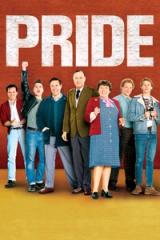
Pride(2014)
dir. Matthew Warchus
Same event: Labor Movement · Same theme: Community Organizing
Gay activists back striking miners. The miners notice.
Britain, 1984. A group of London lesbian and gay activists decides the striking coal miners being crushed by the Thatcher government are fighting the same enemy they are, and starts raising money for a Welsh mining village. The village doesn't know what to make of them, and the feeling is mutual. Based on a true story.
Why it’s here: The punk move is the alliance: two groups that had every social reason to stay apart chose solidarity on the strength of a shared opponent, and the film lets the awkwardness, the prejudice and the first dance-floor thaw all play out on screen. The pedagogy is in how organizing actually works. Coalitions get built through food, favors and showing up, not through agreeing on everything, and the film makes that feel like something a viewer could do. It is a crowd-pleasing dramatization, so some characters and events are composited or invented, and it is worth reading up on the real Lesbians and Gays Support the Miners campaign afterward.
Where to watch: Free on Kanopy, rent on Apple TVLetterboxd ↗
Same event, different angle
The same history — told by someone who saw it differently.
Aristophanes' Lysistrata: A Dual Language Edition
Aristophanes
The oldest sex strike in history. Still works.
✦ READ – REFLECT → RESIST
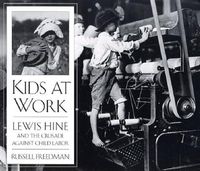
Kids at Work: Lewis Hine and the Crusade Against Child Labor
Russell Freedman
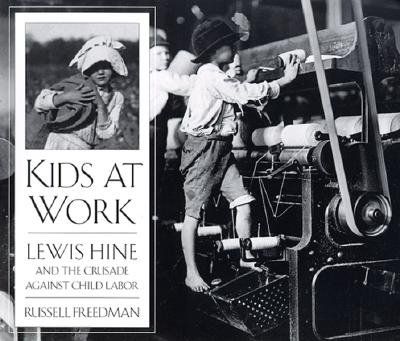
Photographs as evidence. Evidence as law.
✦ READ – REFLECT → RESIST
Capital in the Twenty-First Century
Thomas Piketty
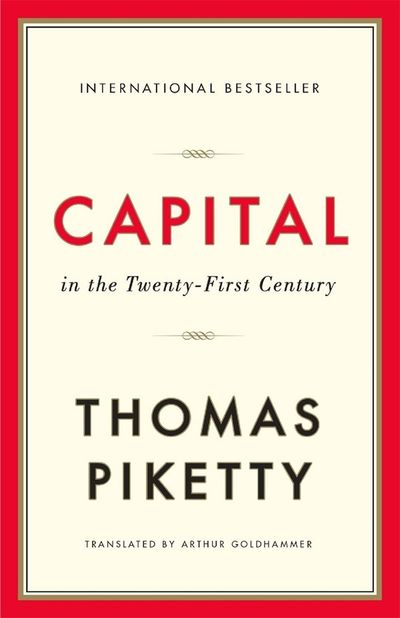
The numbers don't lie. The rich make the rules.
✦ READ – REFLECT → RESIST
Germinal
Émile Zola

They had nothing left to lose. They struck anyway.
✦ READ – REFLECT → RESIST
Same pattern, different era
Different time, different place. The same thing keeps happening.
Anger Is a Gift
Mark Oshiro

The anger you've been told to put down.
✦ READ – REFLECT → RESIST
Beautiful Trouble: A Toolbox for Revolution
Andrew Boyd & Dave Oswald Mitchell (eds.)
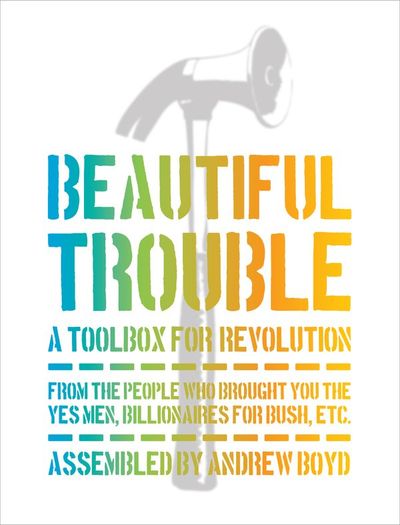
A tactics manual for making trouble well.
✦ READ – REFLECT → RESIST
Kids at Work: Lewis Hine and the Crusade Against Child Labor
Russell Freedman
Photographs as evidence. Evidence as law.
✦ READ – REFLECT → RESIST
A Paradise Built in Hell
Rebecca Solnit
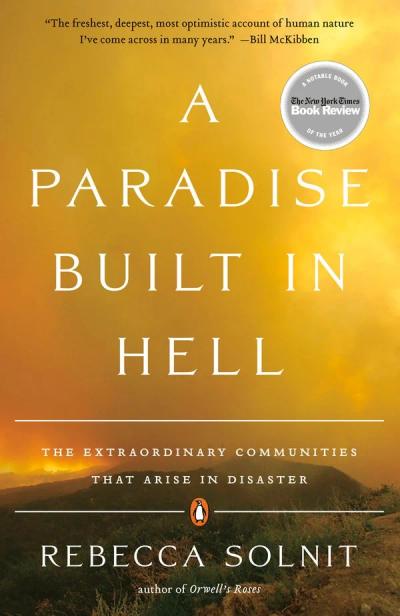
In the ruins, people built the impossible.
✦ READ – REFLECT → RESIST
For the family bookshelf
Same idea, written for a younger reader. Good for reading together.
Amal Unbound
Aisha Saeed

The debt wasn't hers. The cage is.
✦ READ – REFLECT → RESIST
Brave Girl: Clara and the Shirtwaist Makers' Strike of 1909
Michelle Markel
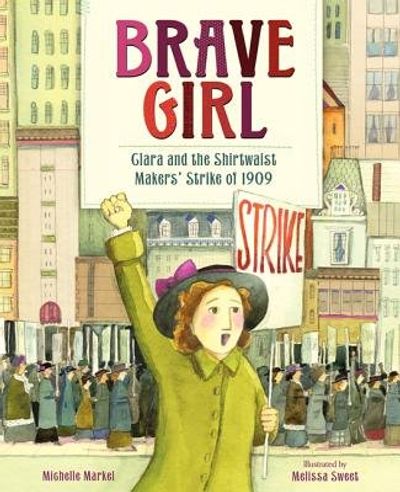
One girl stood up. Twenty thousand followed.
✦ READ – REFLECT → RESIST
Bread and Roses, Too
Katherine Paterson
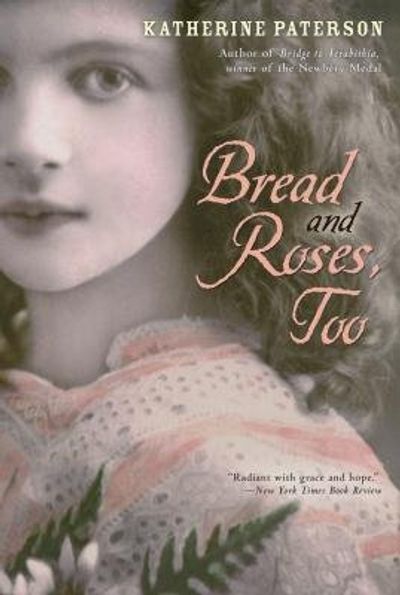
Bread. Roses. Neither is optional.
✦ READ – REFLECT → RESIST
Brown Girl Dreaming
Jacqueline Woodson

A Black girlhood in verse — history you can feel.
✦ READ – REFLECT → RESIST