
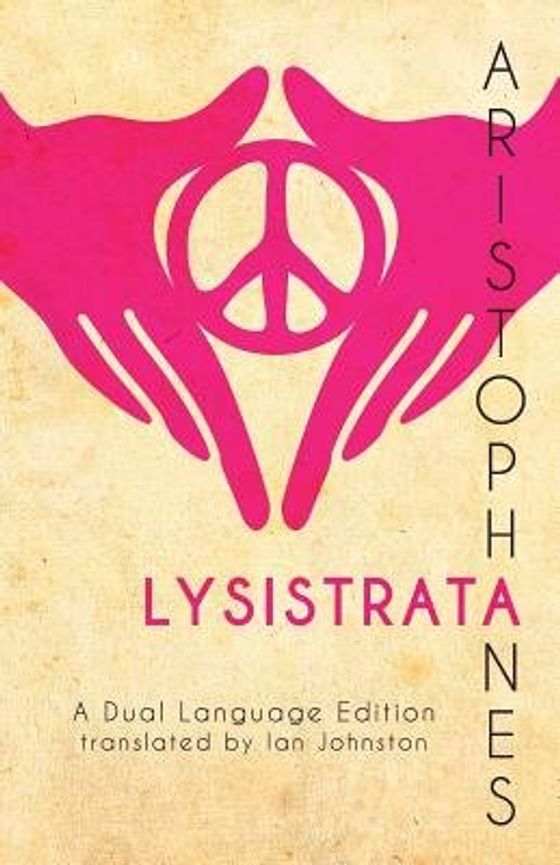
Aristophanes' Lysistrata: A Dual Language Edition
by Aristophanes
The oldest sex strike in history. Still works.
For you if
you've ever thought the people starting wars should have more to lose from them
⚡ Choose Your Route ⚡
Not sold directly on this site. Support indie bookstores with a new copy, or go sustainable with a used one.
Buy New on Bookshop.orgSupports independent bookstores
— OR —
Find Used on Better World BooksSecondhand & sustainable
$10 MSRP · Paperback
Reference price shown. Other editions may be available.
Lysistrata has had enough of the Peloponnesian War. She convenes the women of Athens — then the women of Sparta and every other city-state involved — and proposes a plan: no sex until the men make peace. Written in 411 BCE, during the actual war Aristophanes was watching destroy his city, this play is the oldest surviving anti-war text in the Western canon. It's also genuinely hilarious: men visibly aroused and politically incapacitated, women occupying the Acropolis and seizing the treasury, two sides of a war reduced to negotiating while barely able to stand up straight. The punchline is the point. Two thousand four hundred years later, women have organized sex strikes in Colombia, Liberia, Togo, and Kenya — always citing Aristophanes. He knew something true about power.
Where This Book Lives
- Themes
- absurdity of warbodily autonomycomedy as craftcollective actionfeminismgender and powersatirewomen's resistance
- Topics
- anarchismlabor movement
Ian Johnston is a retired professor from Vancouver Island University whose translations of Greek and Latin texts — freely available online for decades — prioritize readability without sacrificing the original's edge. This dual language edition presents his verse translation alongside the F. W. Hall and W. M. Geldart Greek text on facing pages: accessible read and study edition at once. Worth saying plainly: this is Old Comedy, and Athenian Old Comedy was explicit — the sex strike produces extended jokes about visible male arousal, the women compare notes on how long it's been, and none of it is subtle. That's not a seam; it's Aristophanes doing what he always did, which is make power look ridiculous by talking about bodies. The play was banned by the US Post Office under the Comstock Act until a 1955 court ruling; the Greek military junta banned it in 1967 — a military government, it turns out, was not enthusiastic about a play arguing that the right response to war is organized refusal. The 2003 Lysistrata Project staged readings in 59 countries to protest the Iraq War. The play is 2,400 years old and has never stopped being relevant.
Related Viewing
Shares a topic, theme, or setting with this book in the catalog.
At War / En guerre(2018)
dir. Stéphane Brizé
Same event: Labor Movement · Same theme: Collective Action
The plant is profitable. It closes anyway.
Laurent Amédéo leads 1,100 workers at the Perrin plant — a facility that is profitable, whose multinational parent company has decided to close anyway. Stéphane Brizé shoots En guerre with the grain and rhythm of a documentary: non-professional actors in most roles, a handheld camera that can't find a comfortable distance, meetings that go nowhere for a very long time. Vincent Lindon is the union spokesperson who has to translate collective fury into procedure and back again, day after day. The film covers one stretch of a fight that most films would compress into a montage — the press conferences, the back-channel negotiations, the vote counts, the waiting.
Why it’s here: Brizé makes you sit in the room where a decision is being made about other people's lives by people who will never meet them. What's punk about En guerre is the refusal to let that feel abstract — the camera stays at plant-gate level, in the meeting room, on Laurent's face when the call comes in. What's pedagogical is the film's insistence on duration: you feel what it costs to keep a collective together when the institution on the other side is patient and the workers are not. For anyone who has been told that workers in France are just wired differently, that solidarity at this scale isn't something available to us — this film shows the material conditions that make it possible. And it shows what it costs even there.
Where to watch: Free on Tubi, Kanopy, HooplaLetterboxd ↗
Pride(2014)
dir. Matthew Warchus
Same event: Labor Movement · Same theme: Collective Action
Gay activists back striking miners. The miners notice.
Britain, 1984. A group of London lesbian and gay activists decides the striking coal miners being crushed by the Thatcher government are fighting the same enemy they are, and starts raising money for a Welsh mining village. The village doesn't know what to make of them, and the feeling is mutual. Based on a true story.
Why it’s here: The punk move is the alliance: two groups that had every social reason to stay apart chose solidarity on the strength of a shared opponent, and the film lets the awkwardness, the prejudice and the first dance-floor thaw all play out on screen. The pedagogy is in how organizing actually works. Coalitions get built through food, favors and showing up, not through agreeing on everything, and the film makes that feel like something a viewer could do. It is a crowd-pleasing dramatization, so some characters and events are composited or invented, and it is worth reading up on the real Lesbians and Gays Support the Miners campaign afterward.
Where to watch: Free on Kanopy, rent on Apple TVLetterboxd ↗
Same event, different angle
The same history — told by someone who saw it differently.
Germinal
Émile Zola

They had nothing left to lose. They struck anyway.
✦ READ – REFLECT → RESIST
Kids at Work: Lewis Hine and the Crusade Against Child Labor
Russell Freedman
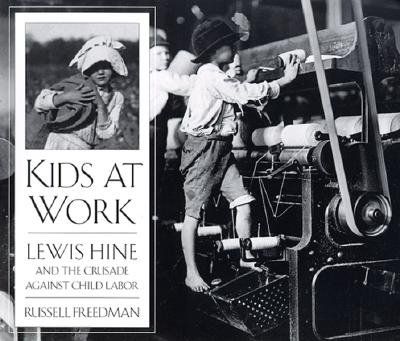
Photographs as evidence. Evidence as law.
✦ READ – REFLECT → RESIST
Life and Death of the American Worker: The Immigrants Taking on America's Largest Meatpacking Company
Alice Driver

Cheap chicken has a body count.
✦ READ – REFLECT → RESIST
Seeing Like a State: How Certain Schemes to Improve the Human Condition Have Failed
James C. Scott
Why the state keeps "improving" things into ruin.
✦ READ – REFLECT → RESIST
Same pattern, different era
Different time, different place. The same thing keeps happening.
A Court of Thorns and Roses
Sarah J. Maas
Survival instincts don't stop at the Wall.
✦ READ – REFLECT → RESIST
Abolition. Feminism. Now.
Angela Y. Davis, Gina Dent, Erica R. Meiners & Beth E. Richie
Safety without cages, built by feminists.
✦ READ – REFLECT → RESIST
Barefoot Gen, Vol. 1: A Cartoon Story of Hiroshima
Keiji Nakazawa

Hiroshima, drawn by a child who lived it.
✦ READ – REFLECT → RESIST
Beautiful Trouble: A Toolbox for Revolution
Andrew Boyd & Dave Oswald Mitchell (eds.)
A tactics manual for making trouble well.
✦ READ – REFLECT → RESIST
For the family bookshelf
Same idea, written for a younger reader. Good for reading together.
Brave Girl: Clara and the Shirtwaist Makers' Strike of 1909
Michelle Markel
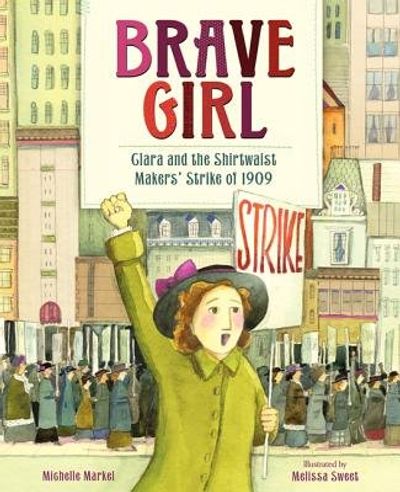
One girl stood up. Twenty thousand followed.
✦ READ – REFLECT → RESIST
Bread and Roses, Too
Katherine Paterson
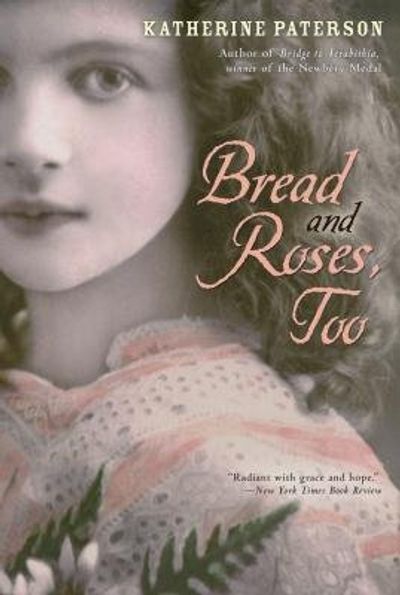
Bread. Roses. Neither is optional.
✦ READ – REFLECT → RESIST
Click, Clack, Moo: Cows That Type
Doreen Cronin
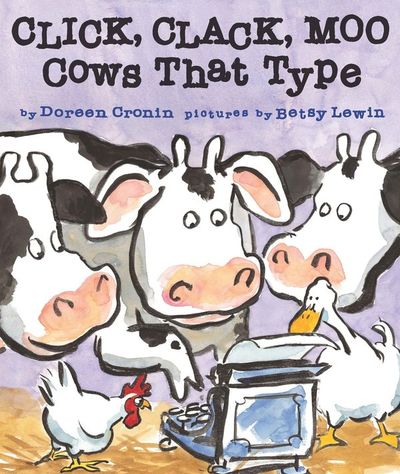
Cows, a typewriter, and a labor strike.
✦ READ – REFLECT → RESIST
Consent (for Kids!): Boundaries, Respect, and Being in Charge of YOU
Rachel Brian

Consent as a skill, not a lecture.
✦ READ – REFLECT → RESIST