
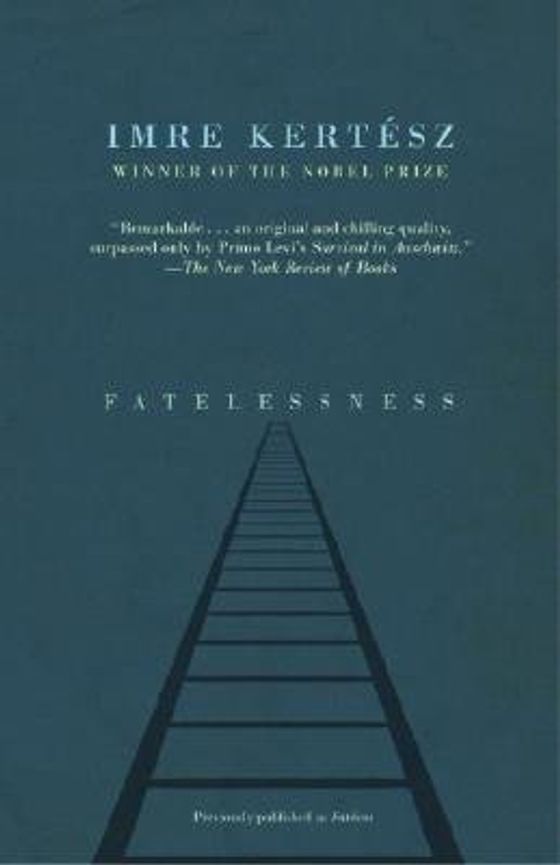
Fatelessness
by Imre Kertész
A boy in Auschwitz, narrating it politely.
For you if
you want the Holocaust without a moral handed to you.
⚡ Choose Your Route ⚡
Not sold directly on this site. Support indie bookstores with a new copy, or go sustainable with a used one.
Buy New on Bookshop.orgSupports independent bookstores
— OR —
Find Used on Better World BooksSecondhand & sustainable
$17 MSRP · Paperback
Reference price shown. Other editions may be available.
György is fourteen when he is taken off a Budapest bus and sent to Auschwitz and then Buchenwald. Kertész, who survived both, tells it in a flat, curious, almost polite voice, and that is what makes it hard to put down: a boy who tries to make sense of the camp as if it were just a new set of rules. Nobel Prize winner, and one of the strangest Holocaust books.
Where This Book Lives
- Setting
- Hungary • Europe
- Voice
- Written by a Hungarian author
Pass. Grim, camp conditions, starvation and death; adult shelf. Kertész won the Nobel in 2002 and the novel's deadpan tone was controversial in Hungary. No documented author concerns. Close relatives: If This Is a Man (suggested 10-21), Kolyma Tales (suggested 10-31) and The Diary of a Young Girl.
Related Viewing
Shares a topic, theme, or setting with this book in the catalog.
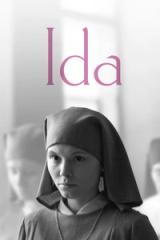
Ida(2013)
dir. Paweł Pawlikowski
Same country: Poland · Same themes: Grief and Loss, War and Atrocity
A novice learns she is Jewish, and what her town hid.
Poland, 1962. Anna is a novice about to take her vows when the mother superior sends her to meet her only living relative, her aunt Wanda, a hard-drinking former state prosecutor. Wanda tells her she is Jewish and that her real name is Ida, and the two women drive into the countryside to find out what happened to her parents. It is shot in black and white, in 82 minutes.
Why it’s here: The film puts Polish complicity in the Holocaust on screen through a quiet road movie. What's punk is Wanda, who once sentenced people for the state and now has to live with it. What's pedagogical is how it handles guilt, memory and what a country hides. Pairs with Number the Stars and Everything is Illuminated.
Where to watch: Prime Video, MUBI; free on Kanopy, Hoopla, Tubi, Plex; rent $2.99 (JustWatch US)Letterboxd ↗

The Tin Drum(1979)
dir. Volker Schlöndorff
Same countries: Poland, Germany
A boy who refuses to grow up in a country that won't.
Born in Danzig in 1924 with an adult intellect, Oskar decides to stop growing at age three and watches, tin drum in hand, as Germany slides into Nazism and war. Adapted from Günter Grass's Nobel-adjacent novel.
Why it’s here: Punk in its total commitment to a surreal metaphor — Oskar's stunted body becomes a mirror for a society arresting its own moral development under fascism. Pedagogical, with a real caveat around its content, in using grotesque satire to indict complicity rather than heroism.
Where to watch: Streaming on Criterion ChannelLetterboxd ↗
Same pattern, different era
Different time, different place. The same thing keeps happening.
A Pattern Language: Towns, Buildings, Construction
Christopher Alexander et al.

253 patterns for designing a place people can live in.
✦ READ – REFLECT → RESIST
A Peace to End All Peace: The Fall of the Ottoman Empire and the Creation of the Modern Middle East
David Fromkin

The deals that drew the Middle East in a hurry.
✦ READ – REFLECT → RESIST
Anger Is a Gift
Mark Oshiro

The anger you've been told to put down.
✦ READ – REFLECT → RESIST
Bird by Bird: Some Instructions on Writing and Life
Anne Lamott
Write the terrible first draft. One bird at a time.
✦ READ – REFLECT → RESIST
Flip the lens
Same country. Now hear it from the other side.
Autocracy, Inc.: The Dictators Who Want to Run the World
Anne Applebaum
The network behind every strongman.
✦ READ – REFLECT → RESIST
Eichmann in Jerusalem: A Report on the Banality of Evil
Hannah Arendt

The banality of evil, reported from the courtroom.
✦ READ – REFLECT → RESIST
Ordinary Men: Reserve Police Battalion 101 and the Final Solution in Poland
Christopher R. Browning
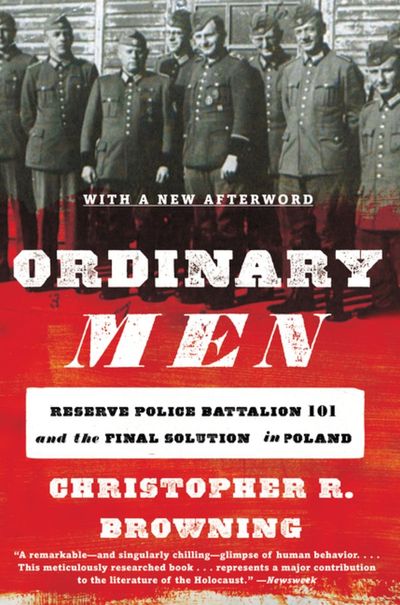
How regular men became mass killers.
✦ READ – REFLECT → RESIST
Stasiland
Anna Funder

East Germany's Stasi, interviewed by a disbeliever.
✦ READ – REFLECT → RESIST
For the family bookshelf
Same idea, written for a younger reader. Good for reading together.
Ada's Violin: The Story of the Recycled Orchestra of Paraguay
Susan Hood

A violin made from a landfill. A real orchestra.
✦ READ – REFLECT → RESIST
Akata Witch
Nnedi Okorafor

A girl who doesn't fit finds a hidden world.
✦ READ – REFLECT → RESIST
Amal Unbound
Aisha Saeed

The debt wasn't hers. The cage is.
✦ READ – REFLECT → RESIST
Amazing Grace
Mary Hoffman

Grace wants to be Peter Pan. Classmates say no.
✦ READ – REFLECT → RESIST