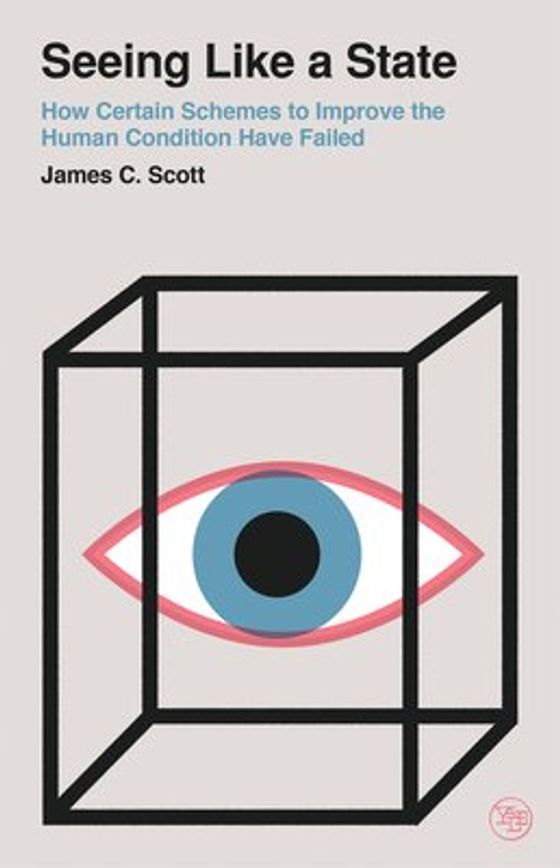
Seeing Like a State: How Certain Schemes to Improve the Human Condition Have Failed
by James C. Scott
Why the state keeps "improving" things into ruin.
For you if
you've watched a well-intentioned system make everything worse and wondered why it keeps happening
⚡ Choose Your Route ⚡
Not sold directly on this site. Support indie bookstores with a new copy, or go sustainable with a used one.
Buy New on Bookshop.orgSupports independent bookstores
— OR —
Find Used on Better World BooksSecondhand & sustainable
$28 MSRP · Paperback
Reference price shown. Other editions may be available.
Seeing Like a State asks why ambitious government schemes to improve human life — Soviet collective farms, Le Corbusier's radiant cities, Tanzania's ujamaa villages, scientific forestry in 18th-century Prussia — keep failing in the same spectacular ways. Scott's answer is the concept of legibility: states can only act on what they can measure and record, so they systematically simplify and standardize what they govern — and in doing so, they destroy the complex, local, adaptive knowledge (what Scott calls metis) that actually makes societies function. This is one of those books that changes the way you see everything: zoning laws, school curricula, crop monocultures, urban grids, bureaucratic forms. After Scott, you'll understand why the system keeps solving for the wrong problem.
Where This Book Lives
Scott wrote this as a political scientist at Yale, but it reads like someone finally found the theory underneath your lived frustration with institutions. The central concept — that states can only act on what they can render legible, and legibility always destroys what it can't measure — reorganizes everything you thought you understood about urban planning, development aid, agriculture, and schools. The anarchist argument is embedded rather than announced: Scott doesn't tell you bureaucracies are bad; he shows you exactly what they do to local knowledge when they enter a community. This is the theory underneath your instinct that the system is solving for itself, not for people.
Related Viewing
Shares a topic, theme, or setting with this book in the catalog.
The Death of Stalin(2017)
dir. Armando Iannucci
Same event: Stalinism
Succession played as the farce it basically was.
Soviet officials scramble for power in the chaotic days after Stalin's death, played as farce that never loses sight of how many people the farce actually killed.
Why it’s here: Turns the actual, undignified scramble after Stalin's death into slapstick without softening what any of it cost — the comedy is the argument that authoritarian succession is always this undignified, not an exception made for laughs.
Where to watch: Free on TubiLetterboxd ↗

Four Lions(2010)
dir. Chris Morris
Same themes: Ideology Critique, Institutional Failure
Would-be bombers who can't get out of their own way.
Four British Muslim men in Sheffield decide to become suicide bombers. Omar is sincere and sharp, Waj is a follower, Barry is a loudmouth convert, and Faisal is trying to train crows to carry explosives. A training trip to Pakistan goes badly wrong, the plan changes shape again and again, and the target ends up being the London Marathon.
Why it’s here: The punk move is the target: Morris takes the most feared subject of the decade and finds the comedy in it, aiming the joke at the ideology and the men chasing it, not at Muslims as a group. After about three years of research with police, terrorism experts and imams, and with British Muslim writers and actors shaping the script, the film sees would-be bombers as sad, bickering, self-important and heartbreakingly human. The pedagogy is in that last part. It shows how a movement offers a lost young man a place and a purpose, how group pressure and ego drive the plan more than belief does, and how the authorities' own blunders belong to the same farce. It treats a suicide bombing as the end of the joke, which is why the ending is hard to watch. Critics split, and some found it a miss, but it makes a useful companion to any serious reading on radicalization.
Where to watch: Free on Kanopy, TubiLetterboxd ↗
Same event, different angle
The same history — told by someone who saw it differently.
Aristophanes' Lysistrata: A Dual Language Edition
Aristophanes

The oldest sex strike in history. Still works.
✦ READ – REFLECT → RESIST
Heart of a Dog
Mikhail Bulgakov

The revolution turned a dog into a bureaucrat.
✦ READ – REFLECT → RESIST
Doctor Zhivago
Boris Pasternak

Love and revolution eat each other alive.
✦ READ – REFLECT → RESIST
The Master and Margarita
Mikhail Bulgakov

he devil visits Soviet Moscow. Nobody notices.
✦ READ – REFLECT → RESIST
Same pattern, different era
Different time, different place. The same thing keeps happening.
Birchers: How the John Birch Society Radicalized the American Right
Matthew Dallek

The fringe that ate the Republican Party.
✦ READ – REFLECT → RESIST
Boys & Sex
Peggy Orenstein
Ask boys about sex. Then listen.
✦ READ – REFLECT → RESIST
Different Seasons
Stephen King
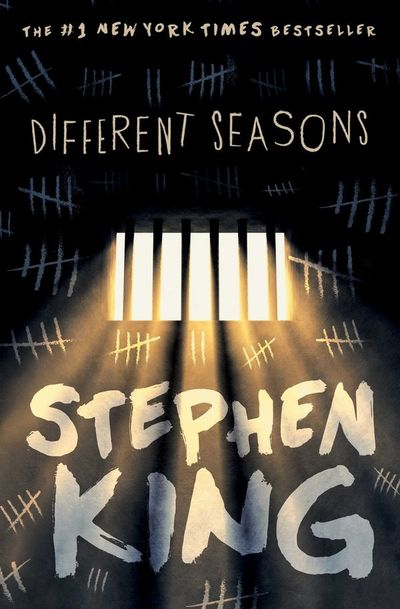
How fascism finds the boy next door.
✦ READ – REFLECT → RESIST
Empire of Pain
Patrick Radden Keefe
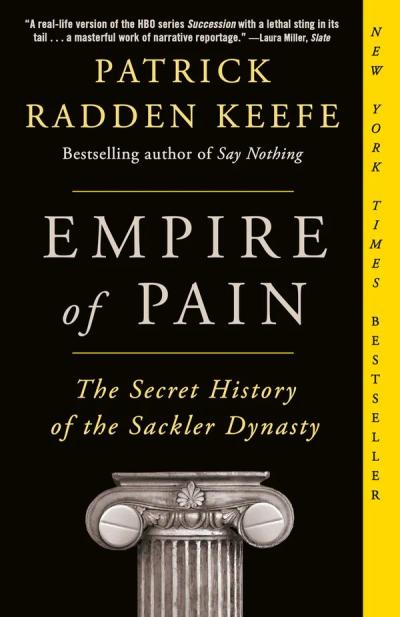
Philanthropy as cover. Addiction as business model.
✦ READ – REFLECT → RESIST
For the family bookshelf
Same idea, written for a younger reader. Good for reading together.