


What Would Alfred E. Neuman Read?
If Alfred E. Neuman were real, his shelf would be crooked, ad-free, and full of people who got away with it. A speculative reading list, with love for Mad.
Chrissie Muggeridge · October 13, 2026
I read Mad standing up.
Like any elementary school miscreant, I was mostly broke. So I would spent as much time as I could in the magazine aisle of a bookstore or a 7-Eleven until getting the boot. I’d go for the back cover first, to fold it and reveal the hidden picture. I was never the first. Someone had always folded it before me.
I loved The Lighter Side Of. I loved Spy vs. Spy. And I loved it whenever Mad took apart something I recognized. That last part did something to me. It made me aware of how much of my world was made, by whom, and for what. It also, I think, prepped me to later really enjoy my Saturday mornings watching Pee-wee’s Playhouse.
So Alfred E. Neuman means something to me. I don’t think I’m alone.
Why he’s cool
Because nothing has managed to sell him anything.
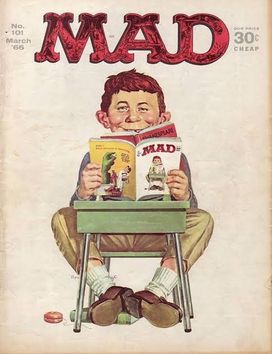
His face was a stage-comedy ad in 1894, then a mince-meat ad, a dentist’s ad, a soda label. For about sixty years it was a face for hire. Then Mad took it. They named him in 1956 and ran him for president, as a write-in, the same year. In 1965 a court ruled his face belonged to the public. Mad ran no advertising from June 1957 to April 2001. A kids’ magazine spent forty-four years making fun of ads and turned down every dollar they offered.
“What, me worry?” isn’t ignorance. It’s what’s left when you’ve seen the pitch and you’re not buying.
Neuman has never recommended a book. I’m putting words in his grin. But if you want to read like him, here’s the shelf, and here’s why he’d hand it to you.
Start with the source
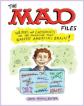
The MAD Files. Twenty-six essays and comics from Roz Chast, Jonathan Lethem, Grady Hendrix, Art Spiegelman and others, published by Library of America in 2024. Neuman’s pitch: you can’t read like him until you know what made him.
Don’t get sold
The Hidden Persuaders, Vance Packard. A book about how advertisers work on you. Neuman’s pitch: he was an ad before he was a magazine. He knows the trade.
Laugh up
A Modest Proposal, Jonathan Swift. Ten pages, a perfectly reasoned policy memo, and a monstrous suggestion. Every straight-faced parody since descends from it. Neuman’s pitch: the joke works because it never blinks.
Pogo, Walt Kelly. In 1952 Kelly introduced Simple J. Malarkey, a bullying wildcat who looked a lot like Senator Joseph McCarthy. When editors pushed back, Kelly put a sack over Malarkey’s head, which made him look worse. Neuman’s pitch: when they tell you to tone it down, make it scarier.
Keep your cool while the system malfunctions
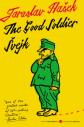
The Good Soldier Švejk, Jaroslav Hašek. Švejk joins the army as the most loyal soldier in the Austrian Empire, drives his superiors to the edge of madness, and gets taken for an idiot by most people around him. Neuman’s pitch: the smile is a tactic.
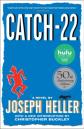
Catch-22, Joseph Heller. A bomber squadron run on logic nobody can escape. Neuman’s pitch: when the rules are absurd, say so, and don’t lose your sense of humor.
Pull the stunt
Revolution for the Hell of It, Abbie Hoffman. On August 23, 1968, Hoffman and Jerry Rubin’s Yippies nominated a 145-pound pig named Pigasus for president in Chicago. Seven were arrested and each posted $25 bond. Neuman ran in 1956. Pogo ran for decades. Pigasus ran in 1968. Neuman’s pitch: if the office is a joke, run.
The grin isn’t indifference. It’s what’s left after you’ve read the fine print.
Related Reading
The MAD Files: Writers and Cartoonists on the Magazine That Warped America's Brain!
David Mikics (ed.)
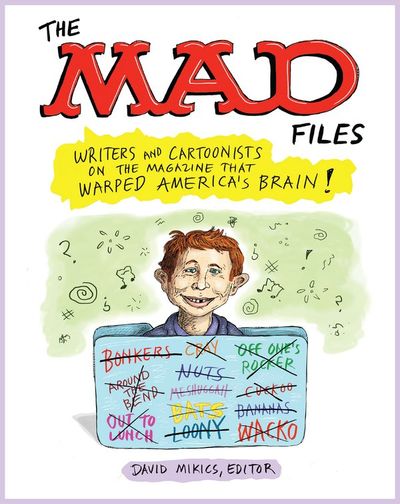
Why MAD taught kids to distrust everything.
✦ READ – REFLECT → RESIST
The Good Soldier Švejk
Jaroslav Hašek
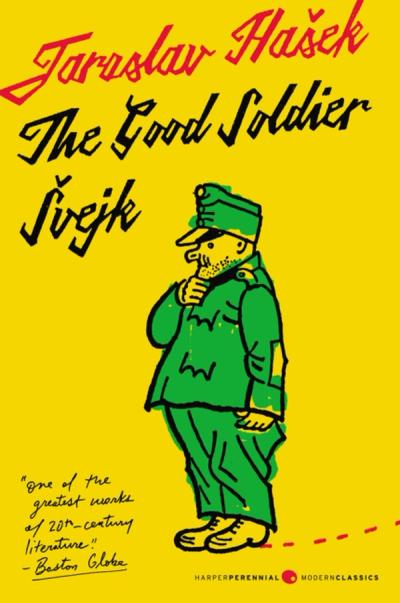
He follows every order perfectly. The empire falls apart.
✦ READ – REFLECT → RESIST
Catch-22
Joseph Heller
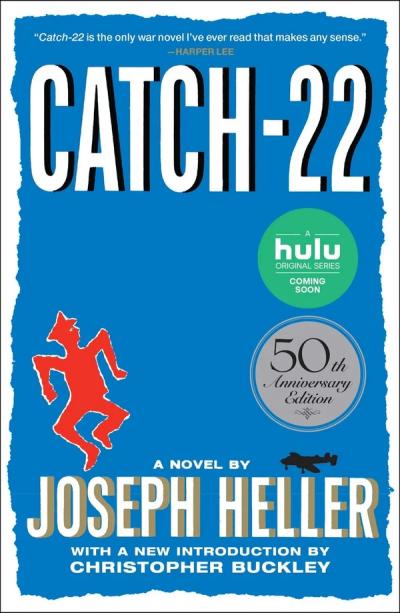
War’s dumbest logic, perfectly told.
✦ READ – REFLECT → RESIST
Candide
Voltaire
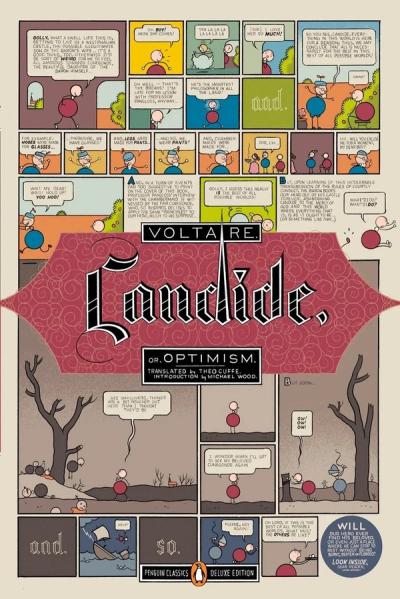
Everything keeps going wrong. His tutor says it's for the best.
✦ READ – REFLECT → RESIST
A Modest Proposal
Jonathan Swift
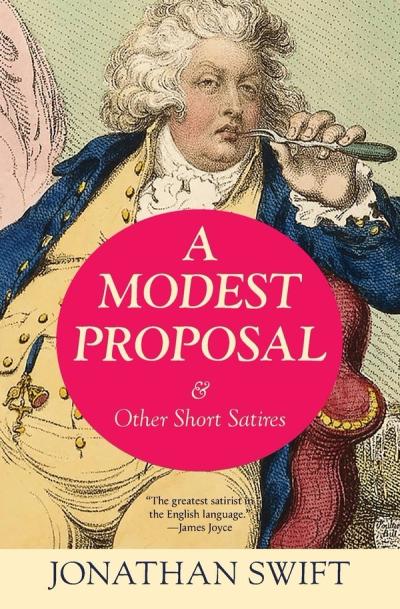
Eat the babies. Swift's ten-page masterclass in satire.
✦ READ – REFLECT → RESIST
Revolution for the Hell of It
Abbie Hoffman
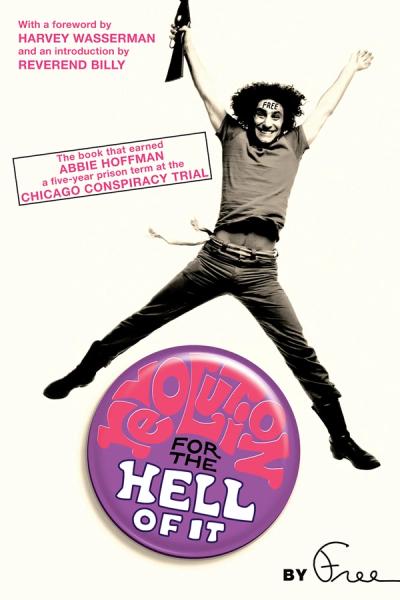
Throw money at the Stock Exchange. Nominate a pig. Win.
✦ READ – REFLECT → RESIST
I Go Pogo
Walt Kelly
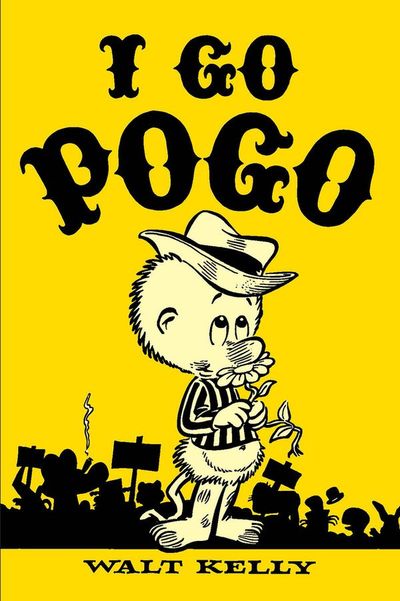
The strip that put a bag on McCarthy's head.
✦ READ – REFLECT → RESIST
Home to Stay!: The Complete Ray Bradbury EC Stories
Ray Bradbury
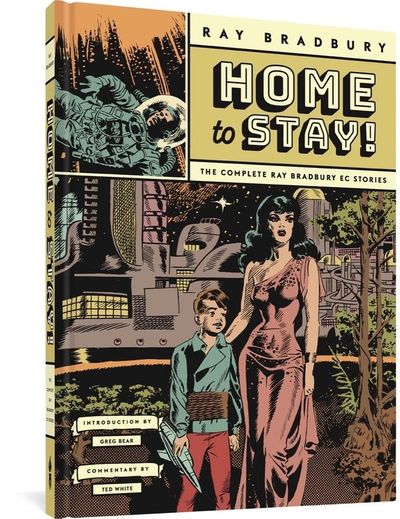
The stories Fredric Wertham needed you not to read.
✦ READ – REFLECT → RESIST