
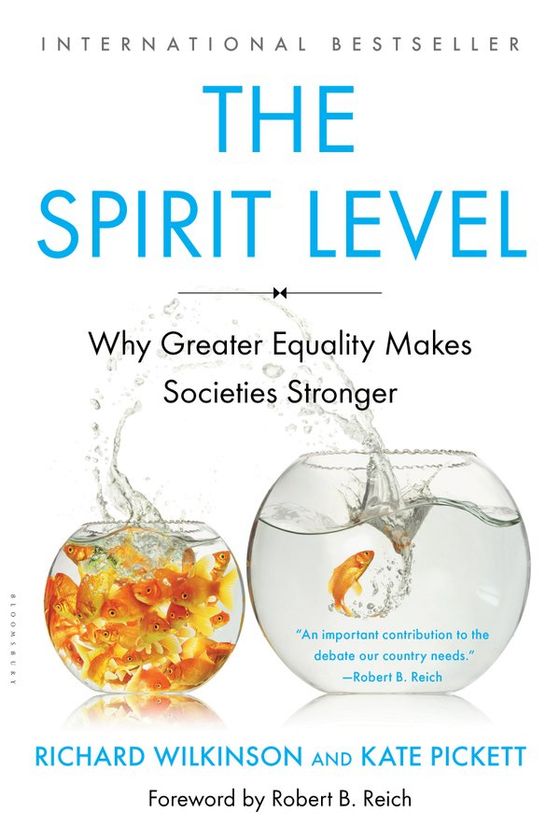
The Spirit Level: Why Greater Equality Makes Societies Stronger
by Richard Wilkinson & Kate Pickett
Inequality makes everyone worse off, rich included.
For you if
you suspect the gap itself is the problem, not just the bottom.
⚡ Choose Your Route ⚡
Not sold directly on this site. Support indie bookstores with a new copy, or go sustainable with a used one.
Buy New on Bookshop.orgSupports independent bookstores
— OR —
Find Used on Better World BooksSecondhand & sustainable
$20 MSRP · Paperback
Reference price shown. Other editions may be available.
Wilkinson and Pickett line up country after country and state after state and show the same pattern: the more unequal a society, the worse it does on health, trust, violence, mental illness and mobility, and that holds for the rich as well as the poor. The argument is that inequality itself, and not just poverty, makes everyone sicker and meaner. It's a book of charts that ends up sounding like a moral case.
Where This Book Lives
Pass with note: some of the statistics and the causal claims have been challenged by economists, and the authors have answered the critics in later editions, so read it as a strong argument and not the last word. It supplies the data under Poverty, by America and The Price of Inequality.
Related Viewing
Shares a topic, theme, or setting with this book in the catalog.
Burning(2018)
dir. Lee Chang-dong
Same themes: Class Inequality, Inequality
A class-war thriller where nobody gets proof.
Jong-su, a young delivery worker and aspiring writer, runs into Hae-mi, a neighbor from his childhood. She goes on a trip and comes back with Ben, a rich and charming man who tells Jong-su his hobby is burning down greenhouses. Then Hae-mi vanishes. Lee Chang-dong adapts a Murakami story into a slow thriller about class, envy and what you can prove.
Why it’s here: The film turns class rage into a mystery that never resolves, which is how class often works. What's punk is that the poor man is the one telling the story and nobody believes him. What's pedagogical is how much the film shows without saying. It's 2.5 hours, slow, and ambiguous on purpose. Close relative: Parasite, which is in the suggestion log.
Where to watch: MUBI, Kanopy, Hoopla, plus free with ads on Tubi/Roku/Pluto; rent $2.99-3.99 (JustWatch US)Letterboxd ↗
Children of Heaven(1997)
dir. Majid Majidi
Same themes: Class Inequality, Poverty
One pair of shoes between a brother and sister.
In a poor neighborhood of Tehran, nine-year-old Ali loses his little sister Zahra's only pair of shoes. Their family can't afford another pair, and their father can barely cover the rent, so the two keep it secret and share Ali's sneakers, swapping them between her morning school shift and his afternoon one. Ali sees a chance to win a pair at a children's race, and everything comes down to it.
Why it’s here: The punk move is the scale: Majidi makes a film about poverty without a villain, a speech or a rescue, and trusts the children's point of view to carry all of it. Nothing in it is shouted. The shoes are the whole argument. The pedagogy is in that restraint. A young viewer sees what a missing pair of shoes costs a family, how kids shield their parents from shame, and how much dignity and care two siblings can hold at once. It is warm and funny and never sentimental, and it is an easy first film from outside the English-speaking world. Majidi worked inside Iran's censorship system, and the film keeps politics out of frame by design, so its critique of class comes through the situation and not through anything the characters say. Good for the whole family, with subtitles.
Where to watch: Free on Kanopy, HooplaLetterboxd ↗
Same pattern, different era
Different time, different place. The same thing keeps happening.
Capitalism and Slavery
Eric Williams
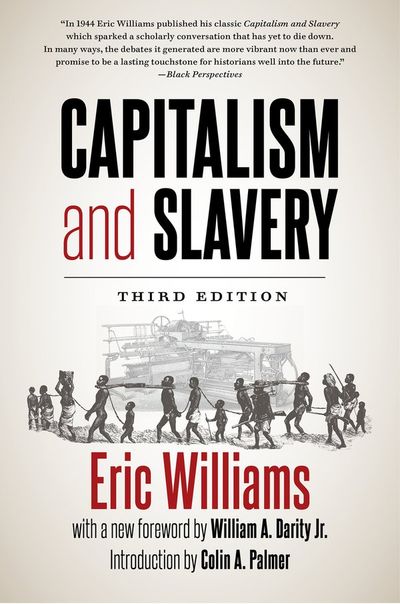
Slavery didn't fund empire. Slavery WAS empire.
✦ READ – REFLECT → RESIST
Doughnut Economics
Kate Raworth
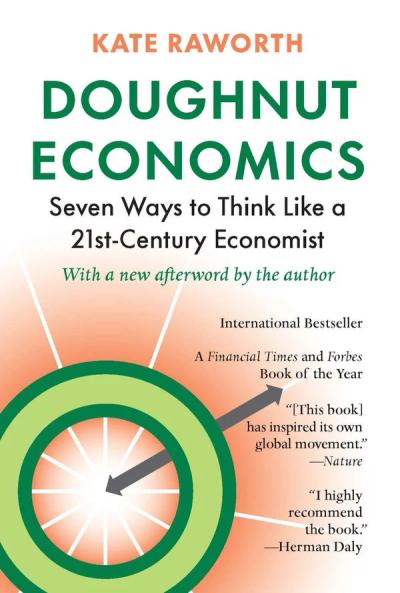
The economy we need, drawn as a doughnut.
✦ READ – REFLECT → RESIST
Enshittification: Why Everything Suddenly Got Worse and What to Do About It
Cory Doctorow
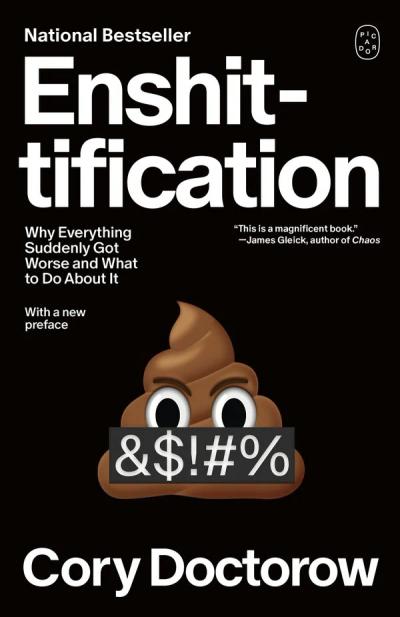
Why your favorite app got worse on purpose.
✦ READ – REFLECT → RESIST
Gerontocracy in America: How the Old Are Hoarding Power and Wealth—and What to Do About It
Samuel Moyn
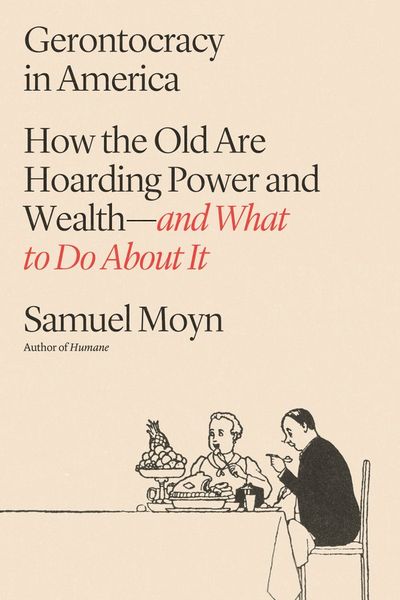
Not a generation gap. An extraction system.
✦ READ – REFLECT → RESIST
For the family bookshelf
Same idea, written for a younger reader. Good for reading together.
Amal Unbound
Aisha Saeed

The debt wasn't hers. The cage is.
✦ READ – REFLECT → RESIST
Last Stop on Market Street
Matt de la Peña
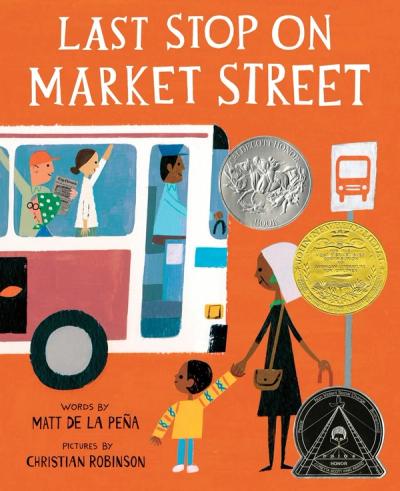
Gratitude with a side of grit.
✦ READ – REFLECT → RESIST
Those Shoes
Maribeth Boelts
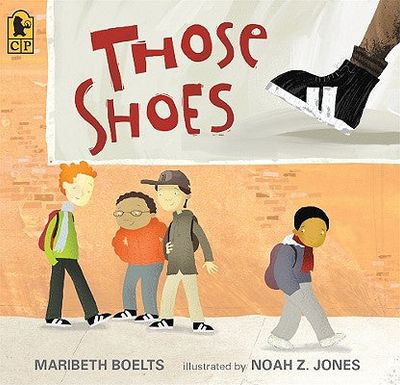
Kindness outlasts coolness.
✦ READ – REFLECT → RESIST
Crenshaw
Katherine Applegate
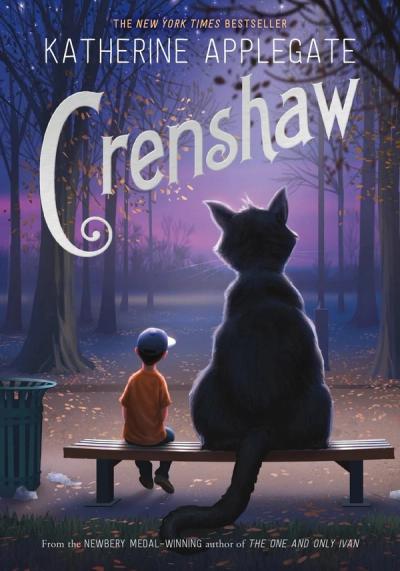
His family is losing their home again. His imaginary cat has opinions.
✦ READ – REFLECT → RESIST