
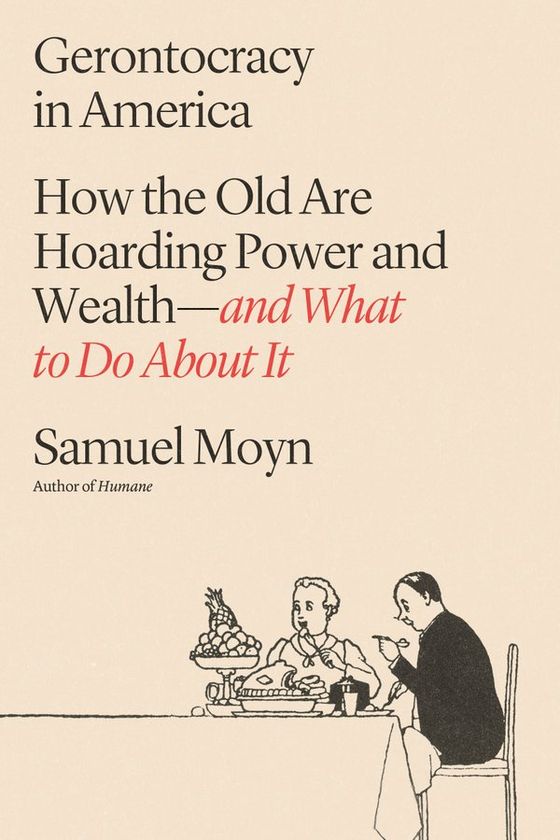
Gerontocracy in America: How the Old Are Hoarding Power and Wealth—and What to Do About It
by Samuel Moyn
Not a generation gap. An extraction system.
For you if
you're watching your future get voted away by people who won't live to see it.
⚡ Choose Your Route ⚡
Not sold directly on this site. Support indie bookstores with a new copy, or go sustainable with a used one.
Buy New on Bookshop.orgSupports independent bookstores
— OR —
Find Used on Better World BooksSecondhand & sustainable
$30 MSRP · Hardcover
Reference price shown. Other editions may be available.
For a moment in 2024, it was enough to note that both presidential candidates were north of seventy-five and call it a day. Samuel Moyn, Yale professor of law and history, says that misses the point entirely. The problem isn't the ages of the men at the top — it's the structural age capture of American institutions from top to bottom. The median net worth of Americans over 70 is eleven times that of Americans under 35. Older voters turn out at rates that make younger preferences nearly irrelevant to election outcomes. The tax code was shaped by decades of political pressure from the most reliable voting bloc in history — a bloc with less stake in the next thirty years than the people who will live them. Social Security and Medicare protect the assets of the old; student debt and unaffordable housing grind down the young. Moyn's argument is a systems argument: the age gap isn't demographic accident, it's political architecture — and dismantling it doesn't mean generational war, it means structural changes that would benefit everyone, including older people who are also being squeezed by a system designed to serve wealth, not age.
Where This Book Lives
- Themes
- capitalism critiquedemocratic erosioneconomic inequalityelite powergenerational legacygenerationsinstitutional critique
- Topics
- public choice economics
Samuel Moyn is the Kent Professor of Law and History at Yale — he's also one of the most deliberately provocative thinkers on the American left, which is relevant context. His earlier work (*The Last Utopia* on human rights, *Humane* on humanitarian warfare) earned him a reputation for contrarian arguments that are important and uncomfortable in equal measure. The seam in this book is worth naming: it is willfully provocative, and Moyn himself acknowledged during the book's rollout that he 'overstepped rhetorically' in some of his characterizations of older people. The New Republic found the book's portrayal of aging as 'an orgy of elder egotism' so dark it undermined its own argument. That is real critique worth sitting with. What survives that critique: the core structural analysis — that age-based wealth concentration and political capture are institutional design choices, not demographic accidents — is sound, specific, and genuinely useful. The proposals Moyn floats (age limits for politicians and donors, weighted votes for the young, mandatory retirement ages) are meant to provoke debate, not legislation. P&P recommends the structural diagnosis; engage the remedies with appropriate skepticism.
Related Viewing
Shares a topic, theme, or setting with this book in the catalog.

Sorry We Missed You(2019)
dir. Ken Loach
Same themes: Capitalism Critique, Economic Inequality
The gig economy takes the whole family.
Ricky, a Newcastle man who needs work, buys a van to become a 'self-employed' franchise delivery driver. His wife Abby, a home-care worker, sells her car to help pay for it. The film follows a family as the gig model eats their time, then their kids' lives. Written by Paul Laverty.
Why it’s here: The film shows how a contract that calls you your own boss moves all the risk onto you. What's punk is that it refuses a villain you can punch: the system does the work. What's pedagogical is the mechanics: fines, unpaid hours, who owns the van. Pairs with Nickel and Dimed and Bullshit Jobs. A hard watch for parents.
Where to watch: Free on Kanopy, Hoopla; rentLetterboxd ↗
The Edge of Democracy(2019)
dir. Petra Costa
Same themes: Democratic Erosion, Elite Power
A filmmaker watches her democracy come apart.
A Brazilian filmmaker narrates the unraveling of her country's democracy from the inside. Petra Costa follows the rise of Lula and the Workers' Party, the impeachment of Dilma Rousseff, Lula's imprisonment and the election of Jair Bolsonaro, with rare access to the people at the center, and weaves in her own family's ties to Brazil's elite and to the resistance against the dictatorship.
Why it’s here: The punk move is the point of view: Costa doesn't pretend to stand outside the story. She narrates in the first person, as a daughter of dissidents and of a family that built its wealth in the system she is questioning, and says plainly that she is grieving. The pedagogy is in how it shows democracy failing slowly instead of in one coup: courts, media, markets and elites each making a reasonable-sounding move until the ground has shifted. That makes it a useful film for anyone trying to recognize the pattern in their own country. It takes a side, and critics have pointed out it is generous to the Workers' Party and thin on the economics and on that party's own corruption, so watch it as one informed witness's account rather than the neutral record.
Where to watch: Streaming on NetflixLetterboxd ↗
Same event, different angle
The same history — told by someone who saw it differently.
Same pattern, different era
Different time, different place. The same thing keeps happening.
Capitalism and Slavery
Eric Williams
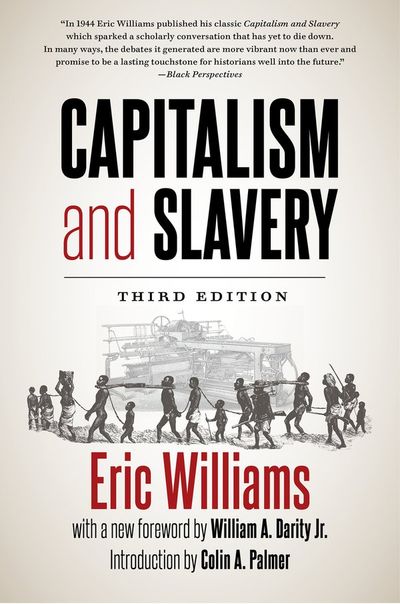
Slavery didn't fund empire. Slavery WAS empire.
✦ READ – REFLECT → RESIST
Empire of Pain
Patrick Radden Keefe

Philanthropy as cover. Addiction as business model.
✦ READ – REFLECT → RESIST
Ferdydurke
Witold Gombrowicz

Society made you small. This is how.
✦ READ – REFLECT → RESIST
How Europe Underdeveloped Africa
Walter Rodney

Africa isn't poor. It was made poor.
✦ READ – REFLECT → RESIST