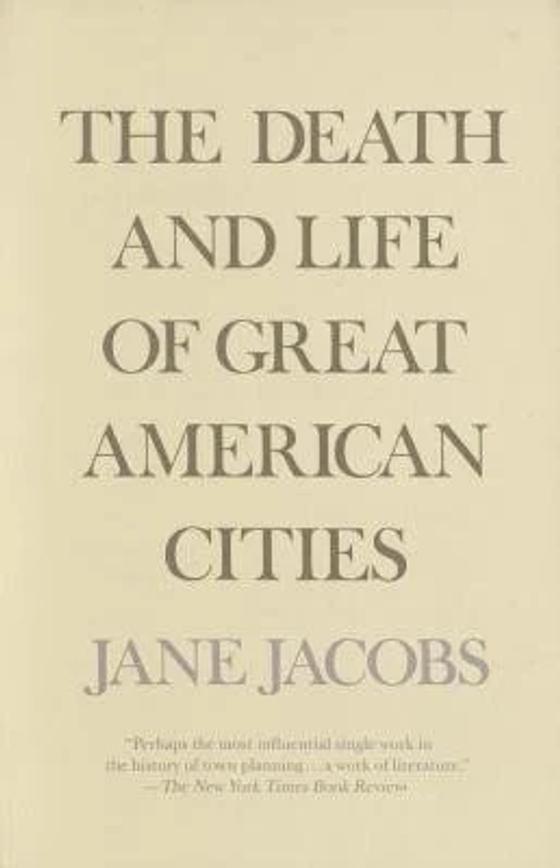
The Death and Life of Great American Cities
by Jane Jacobs
Neighbors know their streets better than planners.
For you if
you've watched a neighborhood get 'improved' by people who never lived there.
⚡ Choose Your Route ⚡
Not sold directly on this site. Support indie bookstores with a new copy, or go sustainable with a used one.
Buy New on Bookshop.orgSupports independent bookstores
— OR —
Find Used on Better World BooksSecondhand & sustainable
$22 MSRP · Paperback
Reference price shown. Other editions may be available.
Jacobs looked out of a Greenwich Village window and saw what the planners with their highway maps could not: a sidewalk is a working system, and eyes on the street do more for safety than police. She takes apart urban renewal and shows how top-down 'improvement' flattens the neighborhoods people actually live in. It is a book about how ordinary people read their own streets better than the experts hired to fix them.
Where This Book Lives
Pass with note: some critics argue her vision fed gentrification and that she overlooks race. Both are fair arguments to hold alongside the book. It pairs naturally with Just Action and The Color of Law.
Related Viewing
Shares a topic, theme, or setting with this book in the catalog.
Do the Right Thing(1989)
dir. Spike Lee
Same themes: Community, Gentrification
A hot day in Bed-Stuy. Who's right when it burns?
The hottest day of the summer on one block of Bedford-Stuyvesant, Brooklyn. A neighborhood pizzeria run by an Italian-American family, a gentrifying block, a wall of photos that someone wants changed, and a heat wave that wears everyone's patience thin until a police killing sets the block alight.
Why it’s here: The punk move is the refusal: Spike Lee ends the film by quoting both Martin Luther King Jr. and Malcolm X back to back and declines to tell you which one is right, or whether the climactic act counts as the right thing at all. The pedagogy follows from that. Every character gets a real argument, so the film works as a discussion engine instead of a lecture, and it shows how everyday friction (a wall of photos, a boombox, a bike scuffed by a sneaker) builds toward something state violence then ignites. It has also drawn real critique over how it handles its women and its Korean grocers, so watch it as a contested argument, not a verdict.
Where to watch: Rent on Fandango at HomeLetterboxd ↗
Attica(2021)
dir. Stanley Nelson & Traci A. Curry
Same theme: Institutional Critique
The prison uprising, in survivors’ words.
A documentary on the September 1971 uprising at Attica Correctional Facility in New York, when about 1,300 incarcerated men took over the prison to demand basic rights, and the state's assault that ended it killed 39 men, prisoners and hostages alike. Built from archival footage and testimony from survivors. It was nominated for the Oscar for Best Documentary Feature.
Why it’s here: The film puts the people who lived it back in charge of the story, and the story is how a state answers a list of demands. What's punk is the demands themselves: showers, food, medical care, the right to be treated as human. What's pedagogical is the aftermath, the gap between what officials said happened and what survivors and records show. It's a lesson in how to read an official account.
Where to watch: Paramount+; rent Amazon, FandangoLetterboxd ↗
Same pattern, different era
Different time, different place. The same thing keeps happening.
Anger Is a Gift
Mark Oshiro
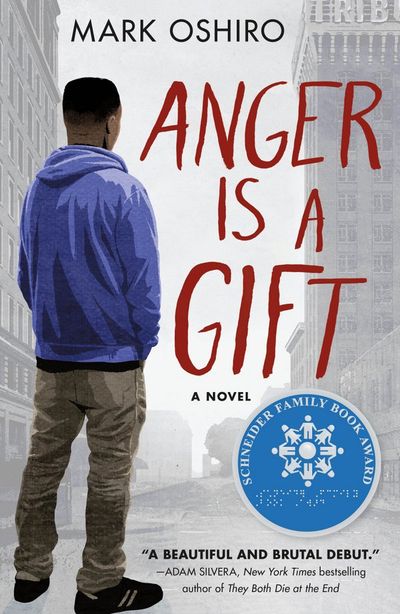
The anger you've been told to put down.
✦ READ – REFLECT → RESIST
Ferdydurke
Witold Gombrowicz

Society made you small. This is how.
✦ READ – REFLECT → RESIST
Gerontocracy in America: How the Old Are Hoarding Power and Wealth—and What to Do About It
Samuel Moyn
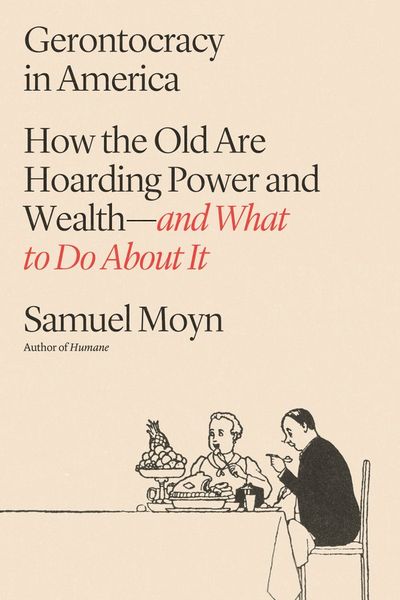
Not a generation gap. An extraction system.
✦ READ – REFLECT → RESIST
Life and Death of the American Worker: The Immigrants Taking on America's Largest Meatpacking Company
Alice Driver

Cheap chicken has a body count.
✦ READ – REFLECT → RESIST
For the family bookshelf
Same idea, written for a younger reader. Good for reading together.