
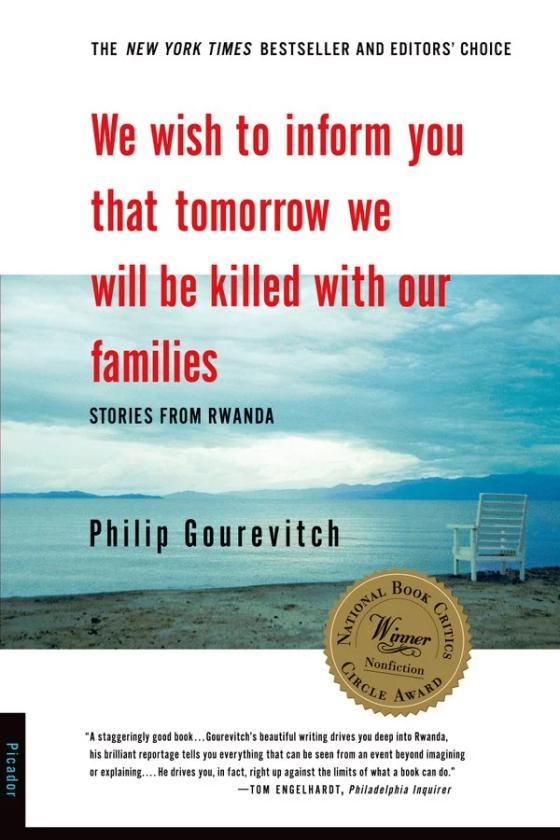
We Wish to Inform You That Tomorrow We Will Be Killed with Our Families: Stories from Rwanda
by Philip Gourevitch
Rwanda, and the world that looked away.
For you if
you remember the headlines and never understood how it happened.
⚡ Choose Your Route ⚡
Not sold directly on this site. Support indie bookstores with a new copy, or go sustainable with a used one.
Buy New on Bookshop.orgSupports independent bookstores
— OR —
Find Used on Better World BooksSecondhand & sustainable
$18 MSRP · Paperback
Reference price shown. Other editions may be available.
In 1994, in about a hundred days, an estimated 800,000 Rwandans, mostly Tutsi, were murdered, many by their neighbors, with machetes and a radio campaign that called it a duty. Gourevitch went to Rwanda after the killing stopped and listened to survivors, perpetrators, and the foreign officials who watched and left. This is the book that made the genocide legible to a Western audience, and it doesn't let the reader off the hook for having looked away.
Where This Book Lives
- Setting
- Rwanda
- Voice
- An outside perspective on Rwanda
Pass with note: Gourevitch is an outsider reporting from Rwanda, and the book has been criticized for leaning toward the account of Paul Kagame's RPF and for how it handles the aftermath. Read it as a powerful witness account, not the last word, and pair it with a Rwandan voice when you can. Graphic descriptions of mass killing.
Related Viewing
Shares a topic, theme, or setting with this book in the catalog.
Hearts and Minds(1974)
dir. Peter Davis
Same themes: Dehumanization, Propaganda
Vietnam, in the words of those who waged it.
A documentary about the American war in Vietnam, made while the war was still being fought. Davis intercuts interviews with generals, officials, pilots, veterans, grieving Vietnamese families and ordinary Americans, setting the language of policy against what that policy did on the ground and at home.
Why it’s here: The punk move is the editing: Davis lets the war's architects talk at length, then cuts their words against a funeral, a bombed village or a cheering football crowd, and trusts the audience to feel the gap. The pedagogy is in how the film teaches viewers to hear the language of power, euphemism and abstraction included, while looking at what it covers up. Worth knowing that the juxtaposition is the argument, and General Westmoreland and others objected that their words were framed unfairly, so watch it as a persuasive documentary, not a neutral record.
Where to watch: Criterion Channel, HBO MaxLetterboxd ↗
Jojo Rabbit(2019)
dir. Taika Waititi
Same themes: Dehumanization, Propaganda
A Hitler Youth kid and his very silly imaginary Hitler.
Germany, near the end of World War II. Ten-year-old Jojo is a devoted Hitler Youth recruit whose imaginary best friend is a goofy version of Adolf Hitler. Then he discovers his mother is hiding a Jewish girl, Elsa, in the walls of their house, and everything he has been taught starts to collide with the person in front of him.
Why it’s here: The punk move is the nerve: Waititi mocks Nazism with slapstick and a ridiculous imaginary Hitler, then keeps turning the screw until the joke stops being funny. The pedagogy is in how it shows indoctrination from the inside. Jojo is a kid absorbing propaganda, pageantry and belonging, and the film shows how easily that happens and how a real person can break the spell. It is a satire, not a history lesson, and some viewers find the comedy too soft on the Holocaust; the film's answer is that ridicule is a way of denying the movement its dignity, not the suffering its weight. Waititi, who is Māori and Jewish, plays the fantasy Hitler himself. Best for teens and up.
Where to watch: Rent on Amazon, Apple TVLetterboxd ↗
Same pattern, different era
Different time, different place. The same thing keeps happening.
Capitalism and Slavery
Eric Williams
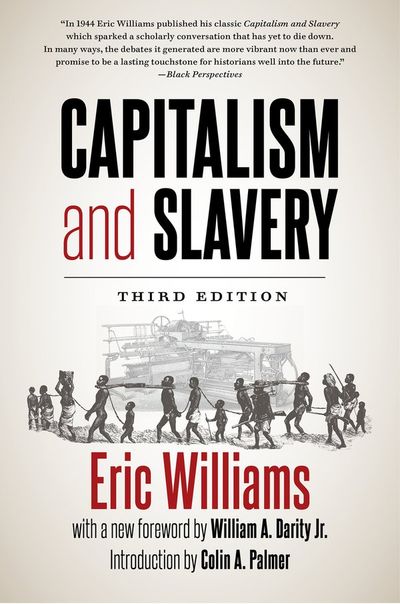
Slavery didn't fund empire. Slavery WAS empire.
✦ READ – REFLECT → RESIST
The Complete Maus: A Survivor's Tale
Art Spiegelman

The only comic to win the Pulitzer. Banned anyway.
✦ READ – REFLECT → RESIST
Empire of Pain
Patrick Radden Keefe
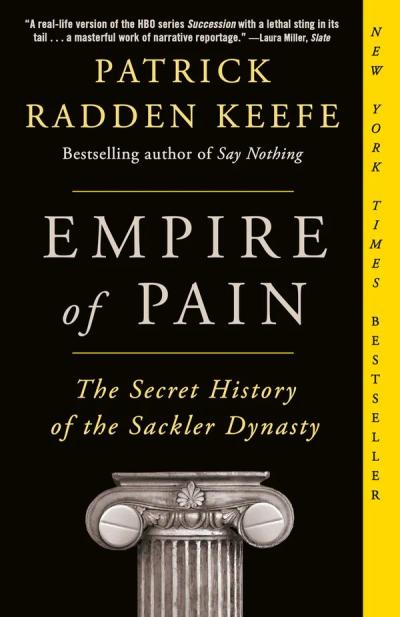
Philanthropy as cover. Addiction as business model.
✦ READ – REFLECT → RESIST
The Ethnic Cleansing of Palestine
Ilan Pappé
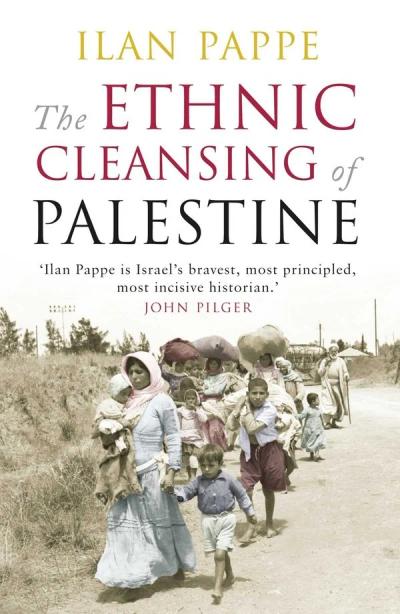
Plan Dalet. Village by village.
✦ READ – REFLECT → RESIST