
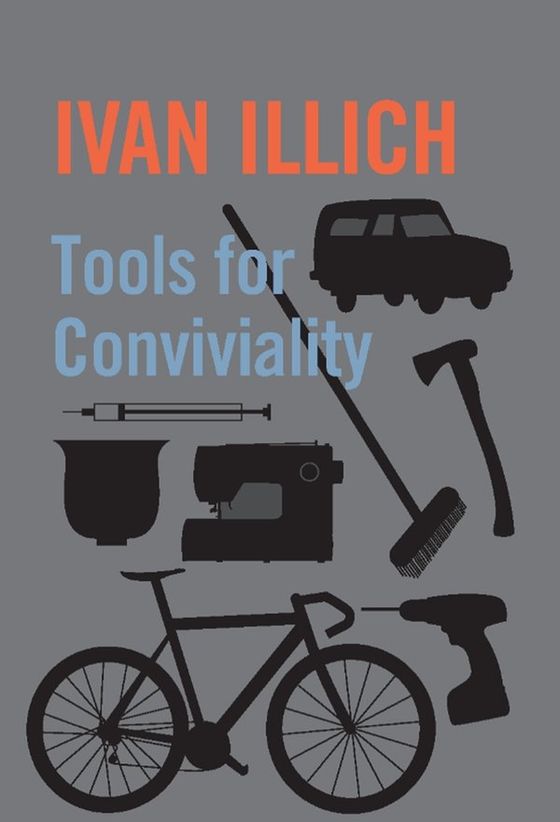
Tools for Conviviality
by Ivan Illich
Tools people can run without a priesthood.
For you if
you want technology and institutions that work for you, not on you.
⚡ Choose Your Route ⚡
Not sold directly on this site. Support indie bookstores with a new copy, or go sustainable with a used one.
Buy New on Bookshop.orgSupports independent bookstores
— OR —
Find Used on Better World BooksSecondhand & sustainable
$15 MSRP · Paperback
Reference price shown. Other editions may be available.
Illich asks a question most of us skip: when does a tool stop serving us and start running us? Schools, hospitals, highways and corporations all begin as helpers and end as monopolies that make everyone dependent on them. He argues for 'convivial' tools, ones ordinary people can use, shape and share without needing an expert's permission, and he sketches what a society built on them could look like. Short, dense and strangely hopeful.
Where This Book Lives
Illich is in the catalog through Deschooling Society; this extends his argument from schools to everything else, and it reads as a prehistory of the right-to-repair and open-source arguments. Written in 1973, so some examples are dated. Pairs with Mutual Aid and Design Justice.
Related Viewing
Shares a topic, theme, or setting with this book in the catalog.
Attica(2021)
dir. Stanley Nelson & Traci A. Curry
Same theme: Institutional Critique
The prison uprising, in survivors’ words.
A documentary on the September 1971 uprising at Attica Correctional Facility in New York, when about 1,300 incarcerated men took over the prison to demand basic rights, and the state's assault that ended it killed 39 men, prisoners and hostages alike. Built from archival footage and testimony from survivors. It was nominated for the Oscar for Best Documentary Feature.
Why it’s here: The film puts the people who lived it back in charge of the story, and the story is how a state answers a list of demands. What's punk is the demands themselves: showers, food, medical care, the right to be treated as human. What's pedagogical is the aftermath, the gap between what officials said happened and what survivors and records show. It's a lesson in how to read an official account.
Where to watch: Paramount+; rent Amazon, FandangoLetterboxd ↗
Crip Camp(2020)
dir. Nicole Newnham & James LeBrecht
Same theme: Community
A summer camp that started a rights movement.
In the early 1970s, a ramshackle summer camp for teenagers with disabilities near Woodstock, Camp Jened, ran on hippie rules: no adults in charge of the kids' lives. The campers, among them co-director James LeBrecht and the future activist Judy Heumann, went on to organize the sit-ins and protests that helped win the Americans with Disabilities Act. It was produced for Netflix and was nominated for the Oscar for Best Documentary Feature.
Why it’s here: The film shows that a movement can begin as a summer. What's punk is that the people it follows organize without asking permission, and refuse to be treated as objects of pity. What's pedagogical is the through-line from a place where kids ran their own lives to a federal law that changed what was possible. It's a rare entry on disability and civil rights, and a natural fit for DoCR's self-organization principle.
Where to watch: Streaming on NetflixLetterboxd ↗
Same pattern, different era
Different time, different place. The same thing keeps happening.
Doughnut Economics
Kate Raworth

The economy we need, drawn as a doughnut.
✦ READ – REFLECT → RESIST
Ferdydurke
Witold Gombrowicz

Society made you small. This is how.
✦ READ – REFLECT → RESIST
Gerontocracy in America: How the Old Are Hoarding Power and Wealth—and What to Do About It
Samuel Moyn

Not a generation gap. An extraction system.
✦ READ – REFLECT → RESIST
Gulliver's Travels
Jonathan Swift

Swift's mean, necessary joke about rulers.
✦ READ – REFLECT → RESIST
For the family bookshelf
Same idea, written for a younger reader. Good for reading together.
Stamped (for Kids)
Jason Reynolds & Ibram X. Kendi

Unlearning racism, one page at a time.
✦ READ – REFLECT → RESIST
The People’s Platform
Astra Taylor
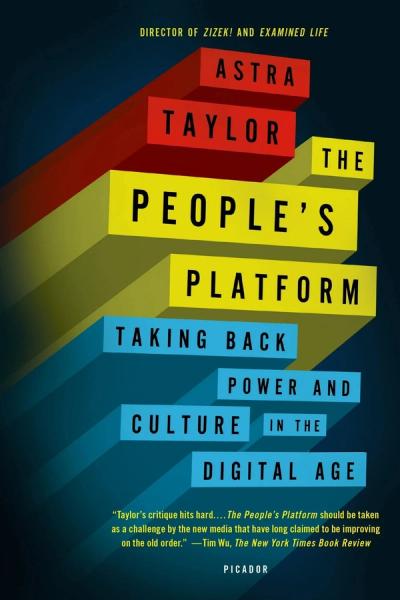
The internet, before it sold out.
✦ READ – REFLECT → RESIST
Pedagogy of the Oppressed
Paulo Freire
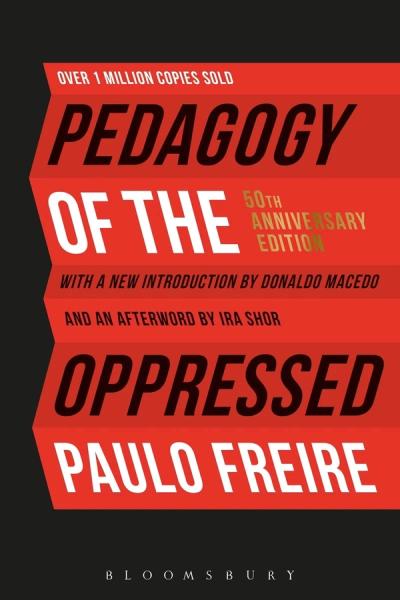
Classroom meets liberation front.
✦ READ – REFLECT → RESIST
The Losers Club
Andrew Clements
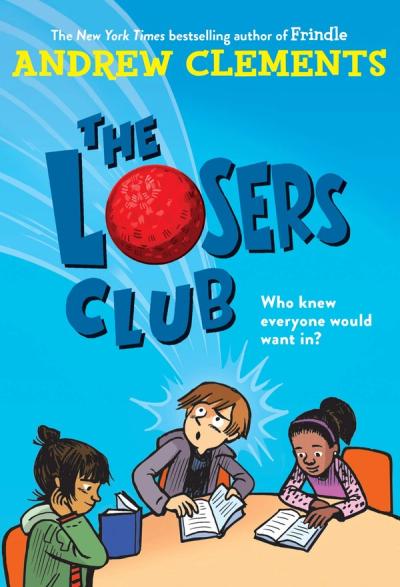
He loves reading. He hates reading club. He starts his own.
✦ READ – REFLECT → RESIST