

School Is the Hidden Curriculum: What Ivan Illich Saw in 1971
Illich didn’t say school fails. He said it works: it teaches you that learning is something an institution hands you. In 1971. The diagnosis still fits.
Chrissie Muggeridge · October 21, 2026
You know the feeling. The parent-teacher conference where your kid becomes a set of numbers, and you nod along because the numbers are the language the room speaks. You leave with the specific unease of someone who has just agreed to something without knowing what.
Ivan Illich named that unease in 1971.
His book Deschooling Society is usually summarized as “school is bad.” That’s not the argument, and the real one is sharper. Illich said school works. It does exactly what it was built to do. The problem is what that turns out to be.
The trick isn’t the curriculum
Illich’s claim was that the lesson that sticks has nothing to do with fractions or the Civil War. Every child learns, by sheer repetition, that learning is something that happens to you, in a room, delivered by a licensed person, in a set order, and certified at the end. Do that for twelve years and you stop believing learning can happen any other way. He wrote that schools teach people to confuse process and substance. Being taught becomes the same thing as learning. A diploma becomes the same thing as competence. Going to school becomes the same thing as being educated.
He called this the hidden curriculum, and he thought it did more damage than anything on the official one. It trains you to wait for permission to know things.
The priest who wrote it
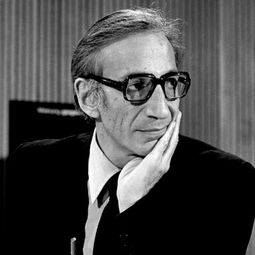
The man who wrote this was Vienna-born, a Catholic priest, and he ran a documentation center in Cuernavaca, Mexico, where people came to argue with him. That makes the book stranger and better. An ordained member of one enormous institution wrote the case against another, and he knew exactly how an institution persuades you that you can’t live without it.
He wasn’t telling anyone to burn the buildings. He was asking a question most of us skip: what would learning look like if nobody needed to be certified to do it?
What he wanted instead
His answer was what he called learning webs. The idea fits in three sentences. Tools, places, and materials open to anyone who wants to learn from them. Lists of people willing to teach what they know. And a way to find someone who wants to learn the same thing you do. Nobody in 1971 had the internet, and he described something that reads like it. He also described a good library, a skate park, and a zine fair.
The honest critique is that he was better at the diagnosis than the blueprint. Illich gave us the problem very clearly and the fix only roughly. Anyone who has tried to run a learning web will tell you the people who show up are not evenly spread. Sharing knowledge freely still favors those who already know where to look. Hold both facts at once.
Why he belongs on this shelf
P&P’s whole premise is that curiosity is an act of resistance. Illich is the person who explained why it has to be, and who was raised on the lie. If you spent your childhood being graded, you learned to ask “will this be on the test?” before you asked “is this true?” Un-learning that is slow, adult, uncomfortable work, which is precisely the work See Through It exists for.
He’s also the root of a family tree. John Holt watched clever kids learn to fail in How Children Fail. Postman and Weingartner wrote Teaching as a Subversive Activity. Gatto wrote Dumbing Us Down. Peter Gray’s Free to Learn is the evidence base, built on research into how children actually learn when nobody manages them. Start with Illich and the rest reads as one long argument.
What to do with this on a Tuesday
You probably aren’t pulling your kid out of school tomorrow, and Illich isn’t asking you to. The practical move is smaller. Notice the permission loop. When your kid asks a real question, the instinct is to say “ask your teacher” or “we’ll look it up for the project.” Try saying “how would we find out?” instead. That is a deschooling move, and it costs nothing.
He didn’t think school was bad at teaching. He thought it was very good at teaching you that you couldn’t teach yourself.
Related Reading
Deschooling Society
Ivan Illich
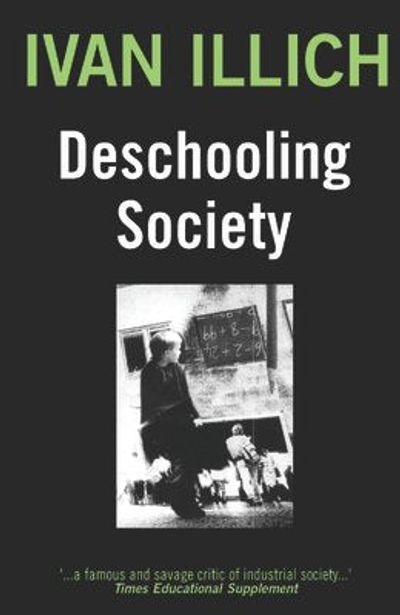
Schools don't educate. They certify. Illich proves it.
✦ READ – REFLECT → RESIST
How Children Fail
John Holt
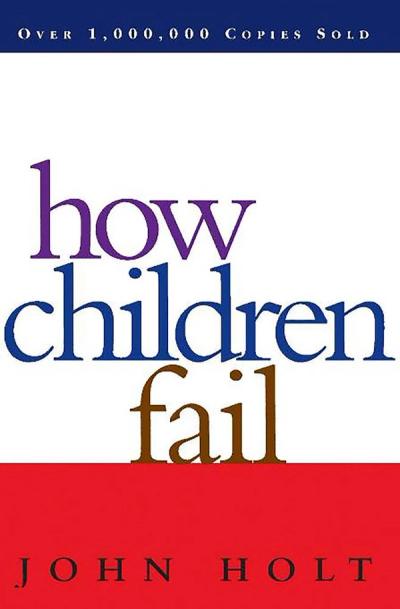
Children don't fail school. School fails children. Here's the proof.
✦ READ – REFLECT → RESIST
Teaching as a Subversive Activity
Neil Postman & Charles Weingartner
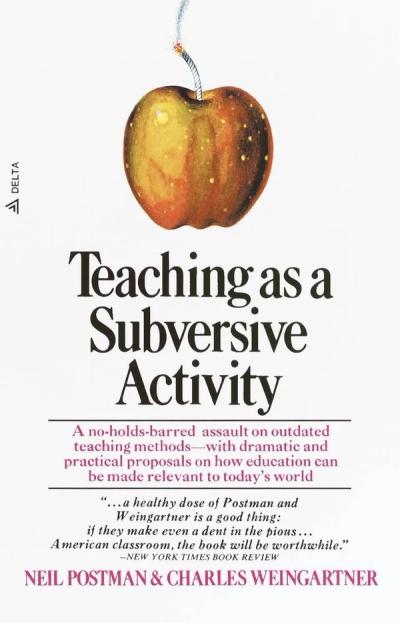
Education should produce crap detectors. Here's how.
✦ READ – REFLECT → RESIST
Dumbing Us Down
John Taylor Gatto
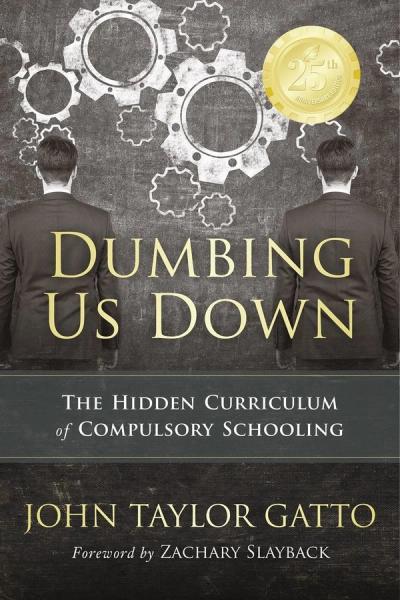
NYC Teacher of the Year quit. Here's what school actually teaches.
✦ READ – REFLECT → RESIST
Free to Learn
Peter Gray
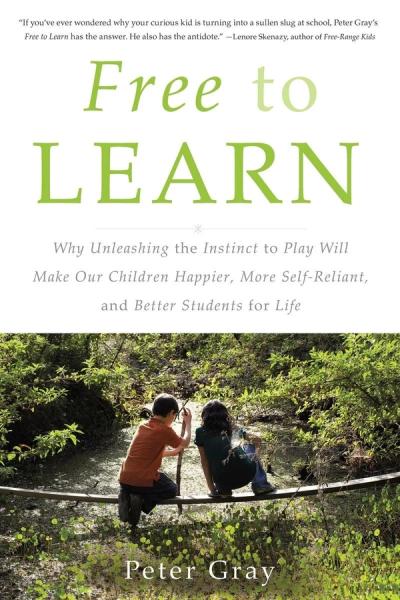
Children are designed to learn through play. School keeps interrupting.
✦ READ – REFLECT → RESIST