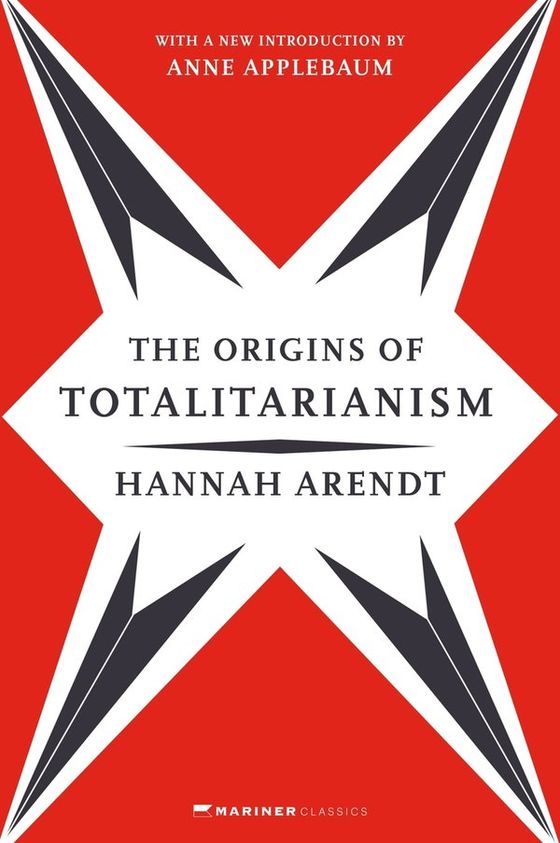
The Origins of Totalitarianism
by Hannah Arendt
The original anatomy of totalitarianism.
For you if
you are watching something familiar being dismantled and needed a name for what comes next.
⚡ Choose Your Route ⚡
Not sold directly on this site. Support indie bookstores with a new copy, or go sustainable with a used one.
Buy New on Bookshop.orgSupports independent bookstores
— OR —
Find Used on Better World BooksSecondhand & sustainable
$22 MSRP · Paperback
Reference price shown. Other editions may be available.
This is the book that makes totalitarianism make sense as a system rather than a personality flaw — Arendt traces how antisemitism and European imperialism provided the raw materials that 20th-century fascism and Stalinism assembled into something new, something that operates through terror and ideology rather than ordinary cruelty. She is the first to argue that Nazism and Stalinism are not opposites but variations of the same political form, and that form is not just historical — it is a standing possibility whenever masses feel superfluous and isolated enough to surrender themselves to a movement that promises to make them necessary. Published in 1951, the book was ahead of its time then and is essential reading now, in any moment when people sense that something familiar is being dismantled without exactly knowing what to call it. By the end you will know exactly what to call it.
Where This Book Lives
- Themes
- authoritarianism
Arendt is a complicated figure — her 1959 essay on school desegregation in Little Rock was widely condemned for prioritizing liberal abstraction over the lived reality of Black students, and that criticism holds. This book predates that controversy by eight years, and its core argument — that totalitarianism is a distinct political form, not just bad leadership — remains the most useful analytical framework we have for what is happening right now. The 2024 Mariner edition includes an introduction by historian Anne Applebaum, whose own political positions have critics on the left; treat the introduction as optional.
Related Viewing
Shares a topic, theme, or setting with this book in the catalog.
The Death of Stalin(2017)
dir. Armando Iannucci
Succession played as the farce it basically was.
Soviet officials scramble for power in the chaotic days after Stalin's death, played as farce that never loses sight of how many people the farce actually killed.
Why it’s here: Turns the actual, undignified scramble after Stalin's death into slapstick without softening what any of it cost — the comedy is the argument that authoritarian succession is always this undignified, not an exception made for laughs.
Icarus(2017)
dir. Bryan Fogel
A doping experiment turns into a defection story.
A filmmaker testing performance-enhancing drugs on himself connects with a Russian anti-doping scientist, whose confession blows open a state-sponsored Olympic doping scheme.
Why it’s here: Started as one man's amateur doping experiment and ended up exposing state-run Olympic fraud, because the scientist he recruited to help became the whistleblower instead. Neither of them planned for that, and the film is honest about how much of it was luck.
Same event, different angle
The same history — told by someone who saw it differently.
Anti-Zionism: A Jewish History
Benjamin Moser

The Jewish tradition they tried to bury.
✦ READ – REFLECT → RESIST
Different Seasons
Stephen King
How fascism finds the boy next door.
✦ READ – REFLECT → RESIST
Doctor Zhivago
Boris Pasternak
Love and revolution eat each other alive.
✦ READ – REFLECT → RESIST
The Master and Margarita
Mikhail Bulgakov

he devil visits Soviet Moscow. Nobody notices.
✦ READ – REFLECT → RESIST
Same pattern, different era
Different time, different place. The same thing keeps happening.
Exit Party
Emily St. John Mandel

Two versions of America. Both feel familiar.
✦ READ – REFLECT → RESIST
How to Be a Fascist: A Manual
Michela Murgia

The fascist media playbook, step by step.
✦ READ – REFLECT → RESIST
The Unbearable Lightness of Being
Milan Kundera
History keeps overwriting your choices. Live anyway.
✦ READ – REFLECT → RESIST
Leaving the Fold
Marlene Winell

Religious Trauma Syndrome. She named it. Here's how to heal.
✦ READ – REFLECT → RESIST
For the family bookshelf
Same idea, written for a younger reader. Good for reading together.
The Book Thief
Markus Zusak

Nazi Germany. A girl steals books. Death is watching.
✦ READ – REFLECT → RESIST
Refugee
Alan Gratz
Three refugees. Three crises. Seventy-six years apart. One truth.
✦ READ – REFLECT → RESIST
The Rooster Who Would Not Be Quiet!
Carmen Agra Deedy, illustrated by Eugene Yelchin
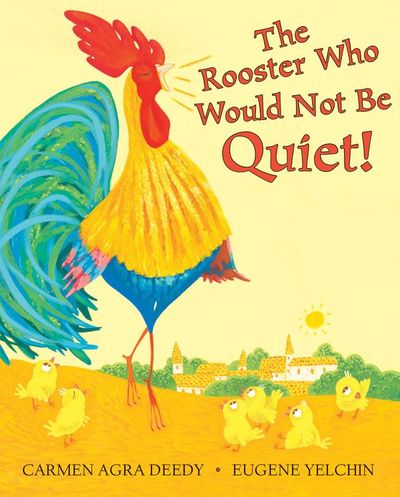
The law said be quiet. The rooster disagreed.
✦ READ – REFLECT → RESIST