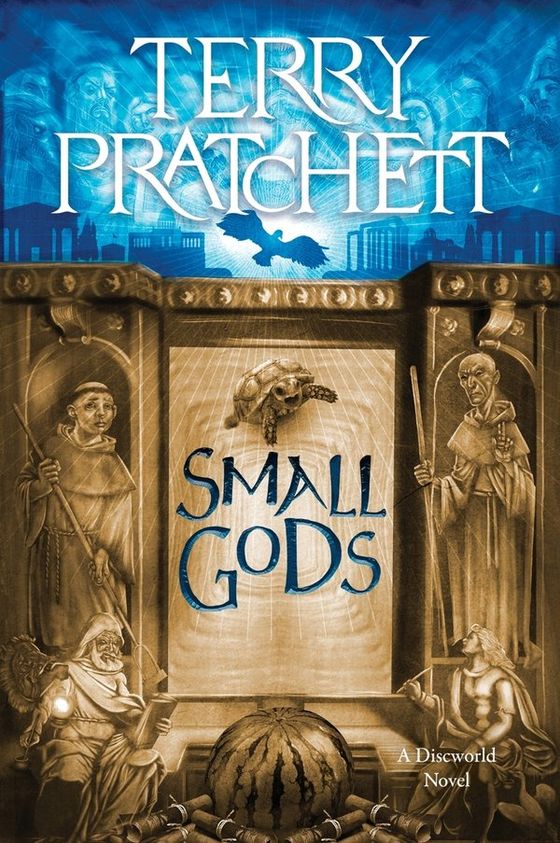
Small Gods
by Terry Pratchett
One tortoise. One believer. Every institution's oldest lie.
For you if
you've noticed the gap between what institutions claim to stand for and what they actually do
⚡ Choose Your Route ⚡
Not sold directly on this site. Support indie bookstores with a new copy, or go sustainable with a used one.
Buy New on Bookshop.orgSupports independent bookstores
— OR —
Find Used on Better World BooksSecondhand & sustainable
$18 MSRP · Paperback
Reference price shown. Other editions may be available.
Om is a god. He should be omnipotent, wrathful, magnificent. Instead, he's a tortoise. The Great God Om, deity of the Omnian Empire, has discovered that his centuries of conquest and conversion produced an empire of fearful compliance — and exactly one actual believer. His name is Brutha: a novice with a perfect memory, no guile, and a quietly radical habit of thinking for himself. Together they will cross a desert, survive the Quisition, witness a war, and learn — through the worst possible means — what the difference is between belief and obedience, and why institutions always prefer the second. Small Gods is Pratchett at his most precise: a comic novel about religion that takes belief more seriously than most theology, and an argument about how power corrupts purpose that lands harder than anything filed under nonfiction.
Where This Book Lives
Small Gods was published in 1992. Pratchett said he wrote it because he was "interested in the nature of gods and how they work" — but what he actually wrote is a diagnosis of how institutions eat the thing that gave them meaning. The Omnian church has hundreds of prophets, thousands of inquisitors, millions of converts — and exactly one believer. That ratio is the joke and the horror and the argument. Pratchett always insisted he was an optimist: the book ends with reform, not revolution. Brutha reshapes the church rather than burning it down. That choice — keeping the form and changing the practice — is either pragmatism or cowardice, and the book trusts you to decide. NPR ranked it #57 on its list of the 100 best science fiction and fantasy novels. Jack Heath called it "one of the 20th century's finest satires." Read it and then look at any institution you're embedded in.
Related Viewing
Shares a topic, theme, or setting with this book in the catalog.
A Clockwork Orange(1971)
dir. Stanley Kubrick
Same theme: Free Will
State violence dressed up as your rehabilitation.
In a near-future Britain, teenage gang leader Alex is imprisoned for ultraviolence and subjected to an experimental state conditioning program meant to strip him of the capacity for violent choice. Adapted from Anthony Burgess's novel.
Why it’s here: Punk in refusing to resolve the discomfort — Alex is a monster, and the state's "cure" is its own kind of monstrous. Pedagogical in forcing the question of whether choosing evil is more human than being engineered into goodness.
Where to watch: Rent/buy: Apple TV, AmazonLetterboxd ↗
Attica(2021)
dir. Stanley Nelson & Traci A. Curry
Same theme: Institutional Critique
The prison uprising, in survivors’ words.
A documentary on the September 1971 uprising at Attica Correctional Facility in New York, when about 1,300 incarcerated men took over the prison to demand basic rights, and the state's assault that ended it killed 39 men, prisoners and hostages alike. Built from archival footage and testimony from survivors. It was nominated for the Oscar for Best Documentary Feature.
Why it’s here: The film puts the people who lived it back in charge of the story, and the story is how a state answers a list of demands. What's punk is the demands themselves: showers, food, medical care, the right to be treated as human. What's pedagogical is the aftermath, the gap between what officials said happened and what survivors and records show. It's a lesson in how to read an official account.
Where to watch: Paramount+; rent Amazon, FandangoLetterboxd ↗
Same event, different angle
The same history — told by someone who saw it differently.
Same pattern, different era
Different time, different place. The same thing keeps happening.
Exit Party
Emily St. John Mandel
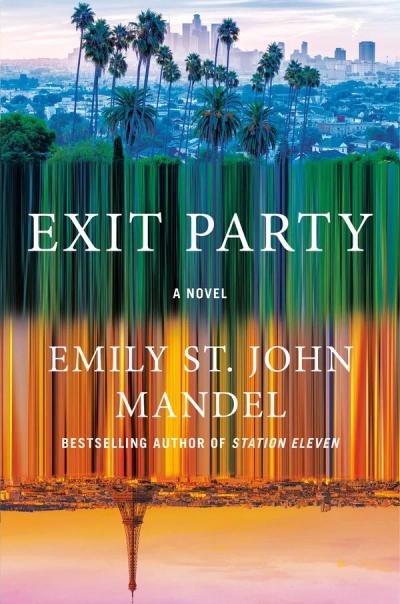
Two versions of America. Both feel familiar.
✦ READ – REFLECT → RESIST
Gerontocracy in America: How the Old Are Hoarding Power and Wealth—and What to Do About It
Samuel Moyn
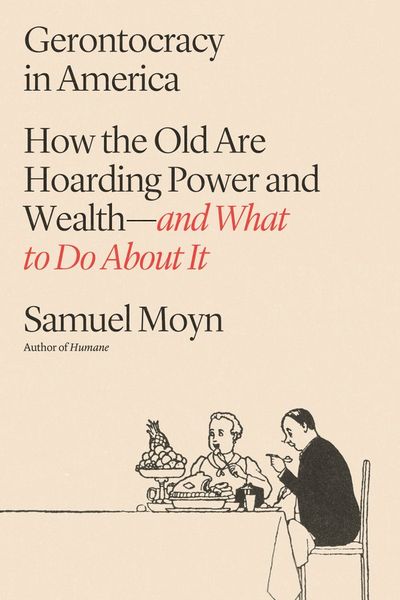
Not a generation gap. An extraction system.
✦ READ – REFLECT → RESIST
Seeing Like a State: How Certain Schemes to Improve the Human Condition Have Failed
James C. Scott
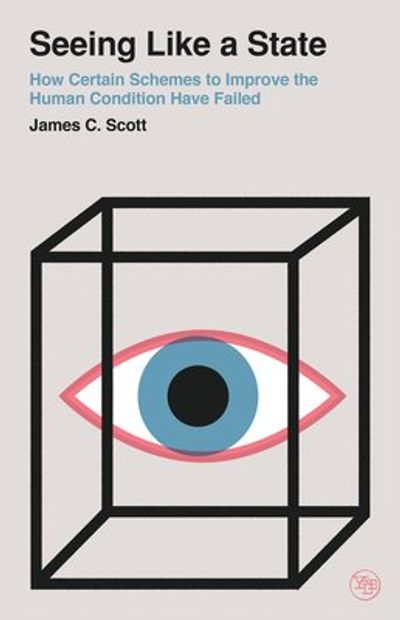
Why the state keeps "improving" things into ruin.
✦ READ – REFLECT → RESIST
Teaching Critical Thinking
bell hooks
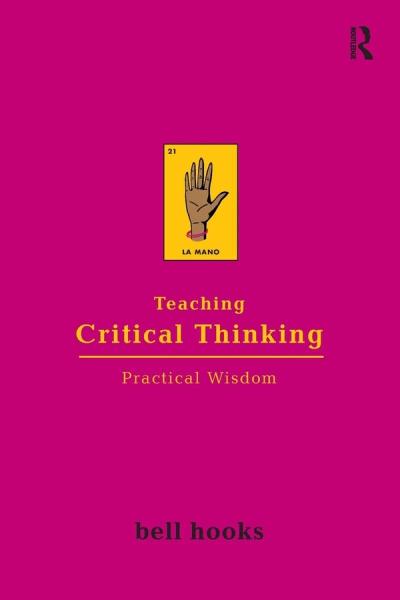
Brain > algorithm.
✦ READ – REFLECT → RESIST
For the family bookshelf
Same idea, written for a younger reader. Good for reading together.