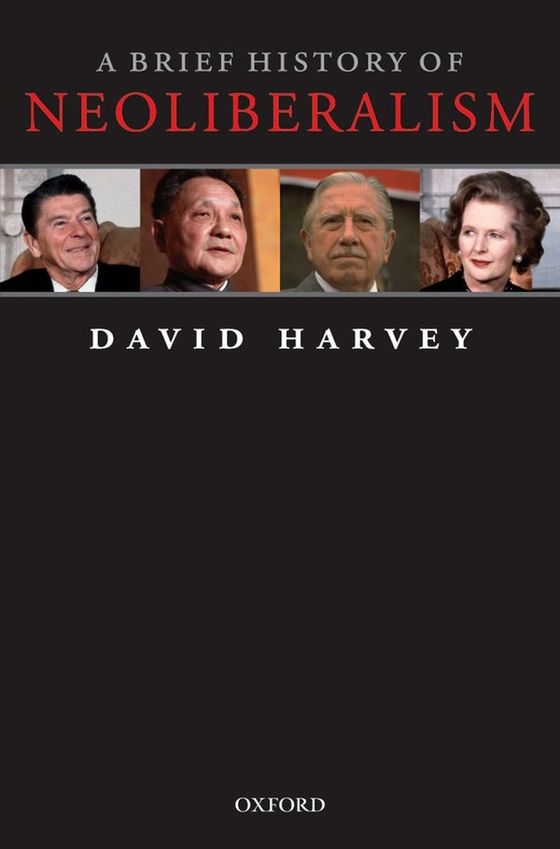
A Brief History of Neoliberalism
by David Harvey
How "free markets" became everyone's common sense.
For you if
you want to know who decided the market should run everything.
⚡ Choose Your Route ⚡
Not sold directly on this site. Support indie bookstores with a new copy, or go sustainable with a used one.
Buy New on Bookshop.orgSupports independent bookstores
— OR —
Find Used on Better World BooksSecondhand & sustainable
$24 MSRP · Paperback
Reference price shown. Other editions may be available.
Harvey traces how a fringe economic doctrine, born in a Swiss mountain retreat, became the common sense of the age. He follows it through Pinochet's Chile, Thatcher's Britain, Reagan's America and Deng's China, and shows a pattern: free markets for the people, bailouts and protection for the owners. It is the origin story of the world your rent, your wages and your school budget live in.
Where This Book Lives
Pass with note. Harvey is an openly Marxist geographer and says so; the argument is committed, not neutral, and some economists dispute his framing. Short and readable for academic prose. Fills a gap: the capitalism shelf has the shocks (Klein) and the debt (Graeber) but not the intellectual origin story. Close relatives: The Shock Doctrine and Capital in the Twenty-First Century.
Related Viewing
Shares a topic, theme, or setting with this book in the catalog.
Inside Job(2010)
dir. Charles Ferguson
Same themes: Corporate Greed, Inequality
The 2008 crash, with the culprits on camera.
Narrated by Matt Damon, Ferguson's Oscar-winning documentary takes apart the 2008 financial crisis: the deregulation, the ratings agencies, the revolving door between Wall Street and Washington and the economists who were paid to say it was fine. He interviews the people responsible, and watches some of them squirm.
Why it’s here: The film shows the crisis as a decision, not a natural disaster. What's punk is the interview chair: the people who profited are asked to explain themselves on camera, and several do not. What's pedagogical is the way it follows the money and the incentives, including the academic ones. It is the film companion to Too Big to Fail and The Big Short, and a fitting pair for the Capitalism bundle. Note: Ferguson was criticized for the access some interviewees were given and for the narrow focus on the US; the film is a one-sided prosecution by design.
Where to watch: Free with ads: The Roku Channel, YouTube Free, Tubi; rent $3.99 on Apple TV, Fandango At Home, Plex; Howdy Amazon Channel listing shows leaving in about 29 days (JustWatch US, updated 2026-11-01). Verify.Letterboxd ↗
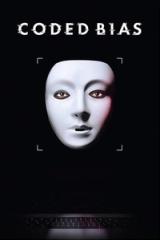
Coded Bias(2020)
dir. Shalini Kantayya
Same themes: Corporate Greed, Inequality
A face-recognition system that cannot see her.
MIT researcher Joy Buolamwini discovers that a face-recognition system can't see her face unless she puts on a white mask. She follows the thread to police departments, landlords and schools that are using such systems, and to the activists in London and New York who are pushing back. It's a documentary about who gets watched and who gets judged by software.
Why it’s here: The film shows how algorithms inherit the prejudice of the people who built them, and who gets hurt first. What's punk is that a graduate student's anomaly turns into a campaign against the tech industry. What's pedagogical is how clearly it explains training data and error rates to a general audience. Pairs with Deep Unlearning, Automating Inequality and Your Face Belongs to Us.
Where to watch: Free on Kanopy, Hoopla and Darkroom; rent $4.99 on Amazon and Apple TV (JustWatch US, Oct 2026)Letterboxd ↗
Same pattern, different era
Different time, different place. The same thing keeps happening.
A Pattern Language: Towns, Buildings, Construction
Christopher Alexander et al.

253 patterns for designing a place people can live in.
✦ READ – REFLECT → RESIST
Collective Courage: A History of African American Cooperative Economic Thought and Practice
Jessica Gordon Nembhard
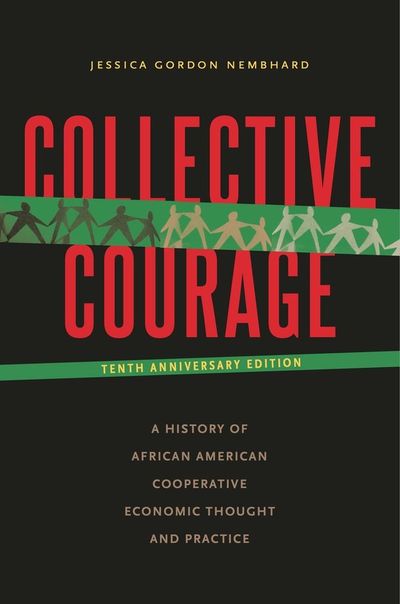
The Black co-ops history forgot to teach.
✦ READ – REFLECT → RESIST
Dear Committee Members
Julie Schumacher
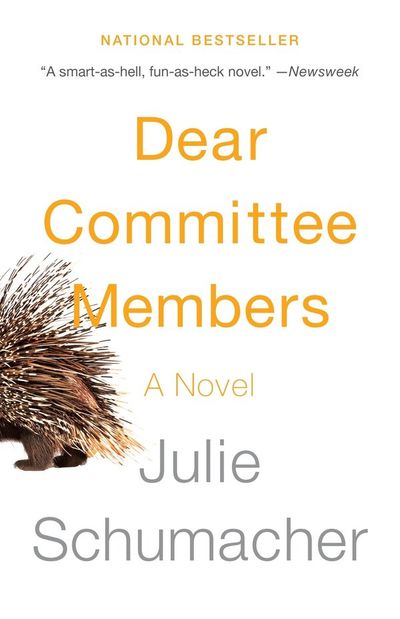
A burnt-out professor and his recommendation letters.
✦ READ – REFLECT → RESIST
Empire of Pain
Patrick Radden Keefe
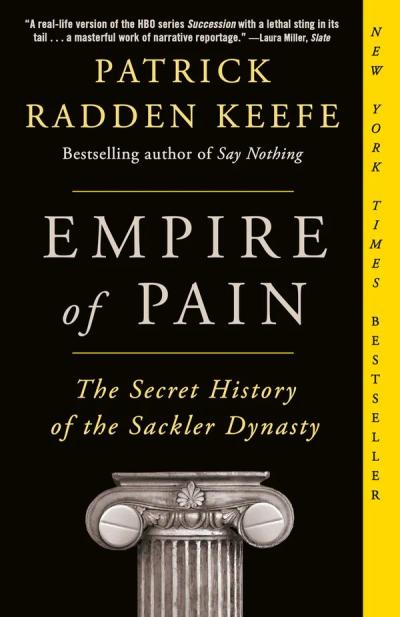
Philanthropy as cover. Addiction as business model.
✦ READ – REFLECT → RESIST
For the family bookshelf
Same idea, written for a younger reader. Good for reading together.