

How to Raise a Kid the Compliance Machine Can’t Digest
Five books from people who looked at school and saw training, not learning. Read in order, they stop being critique and start being a plan.
Chrissie Muggeridge · October 19, 2026
Ask a kid what school is for and listen to the verb. “Get it right.” “Finish.” “Not get in trouble.” Almost nobody says “find out.”
That’s the thread through these five books. Their authors spent careers inside or beside schools, and they arrive at the same accusation: school is not failing at its job. It’s succeeding at a different one. Read in order, they move from diagnosis to something you can actually do on a Tuesday.
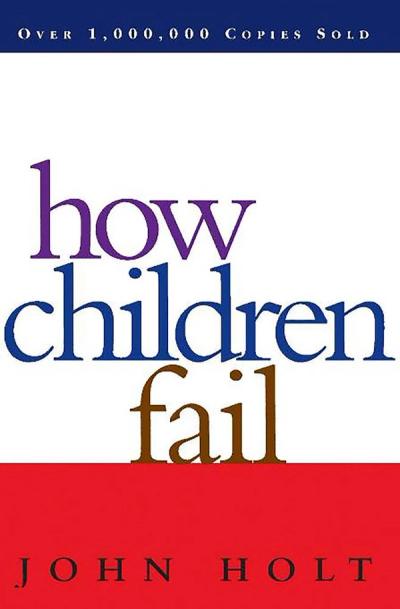
1. How Children Fail — John Holt
Start inside the classroom, because Holt did. He taught in private schools in Colorado and Massachusetts, and in 1964 he published what he saw. The kids weren’t failing to understand. They were succeeding at something else: not looking stupid. They guessed. They hedged. They read the teacher’s face for the answer and called it thinking.
Holt blames the methods. Fix the methods, the argument goes, and the kids will come back. It’s the most hopeful book on this list, and it’s the one that raises the question the next book refuses to accept.
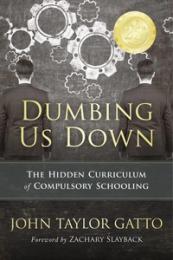
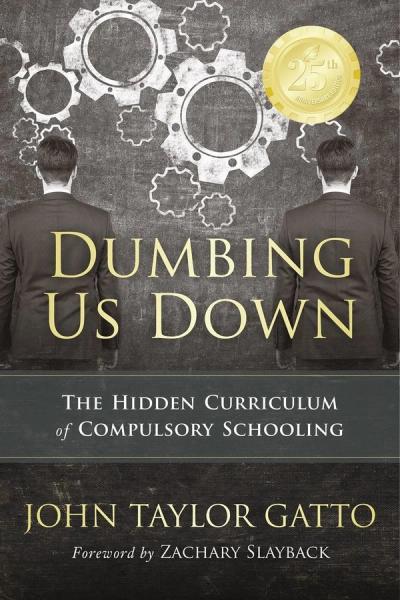
2. Dumbing Us Down — John Taylor Gatto
What if the methods aren’t the bug? Gatto was New York City Teacher of the Year three years running, 1989 through 1991, and New York State Teacher of the Year in 1991. That summer he quit in a Wall Street Journal letter saying he no longer wanted to “hurt kids to make a living.” His 1992 book argues the hurt is structural: bells, rankings, and permission slips teach dependence more reliably than they teach math.
Read this one with a pencil. Historians have challenged how he uses sources, and a 2025 project found some of his quotations can’t be traced or were altered. Take the classroom observations seriously and check the history yourself. It’s a good exercise to hand an older kid, too: here’s a strong argument, now go find out whether it’s true.
Gatto can only tell you what school does to a kid. For why a whole society keeps signing up, you need someone who zoomed out.
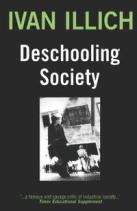
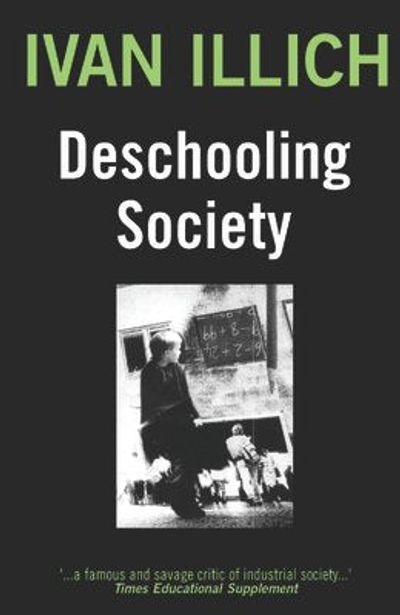
3. Deschooling Society — Ivan Illich
Illich’s claim is bigger and stranger. The problem isn’t bad schools, it’s the belief that learning needs an institution to deliver it. School teaches you to confuse being taught with learning, and a diploma with knowing something. Once you’ve swallowed that, he says, you start needing clinics for your health and banks for your security.
It’s an unsettling book because it’s hard to argue with at the dinner table, and nobody wants to be the parent who “deschooled” a seven-year-old on the strength of a 1970s essay. Illich is better at showing you the cage than at telling you what to do Monday. That’s his gap, and the next book fills the first half of it.
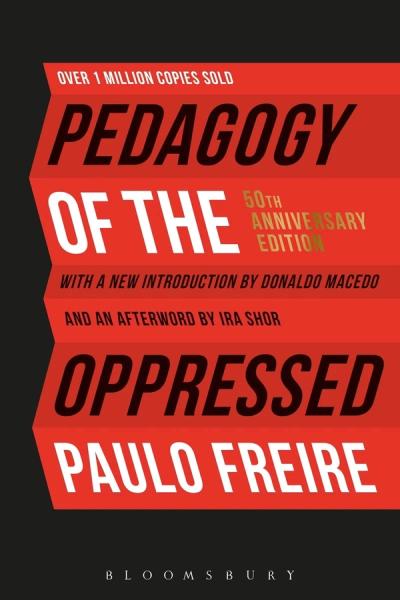
4. Pedagogy of the Oppressed — Paulo Freire
Freire wrote this in exile after the 1964 coup in Brazil, and it contains the idea that turns critique into method. He called conventional teaching the “banking” model: the teacher deposits, the student stores. His alternative treats the learner as someone who names the world, not someone who receives a description of it.
This is the hinge. Everything before it says what’s wrong. Freire says what a relationship between a teacher and a learner looks like when it isn’t a transaction. It can’t go before Illich, because you don’t know what you’re refusing yet. It can’t go after Duckworth, because you need the principle before the practice.
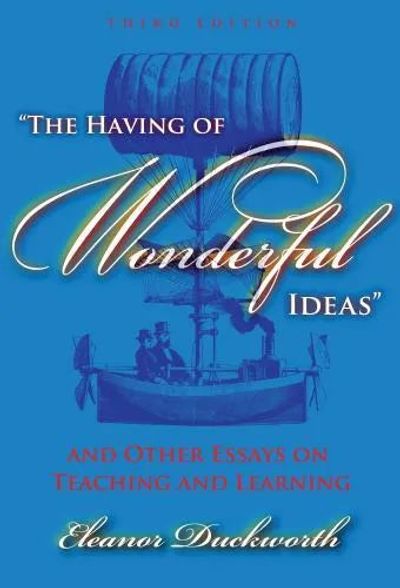
5. The Having of Wonderful Ideas — Eleanor Duckworth
Duckworth trained with Jean Piaget, and her book is the smallest and most practical on the list. A “wonderful idea” isn’t a brilliant one. It’s one you had yourself: the first time a kid works out why the moon changes shape, the first time a group of children argue their way to a result. Her job as a teacher is to set up a situation worth thinking about, take the kid’s thinking seriously, and get out of the way.
That’s the answer to Illich’s gap. You don’t need to burn the schools down by Friday. You need a room where a kid can have an idea that nobody handed over.
Where the rabbit hole bottoms out
Here’s what these five books can’t do: they can’t build the room.
You can read all of them and still have a child in a building with bells. Most of us do. I’m building one alternative, and I’d rather say so than pretend the books alone are the answer. It’s called the Department of Childish Revolution (DoCR), and it’s a youth creative-programming project. The first workshops are planned for Long Beach in 2027, starting with filmmaking, for kids roughly 8 to 14.
The principle comes straight from this list. The adults plan the container: the time, the space, the materials, the rhythm. The kids make the content. Nobody gets graded, and no one is stuck in a seat they don’t want. A kid can sit this one out and join back in whenever they’re ready. It’s Duckworth’s room with Freire’s rule about who names the world.
If you’re a teacher, a filmmaker, a facilitator, or a parent who has read two of these and wanted to argue with the author, I’m looking for collaborators. Start at the Collaborate section of the DoCR page. The books that make up the Facilitator Shelf are the same kind of reading this list belongs to.
Critique is a fine place to start. It’s a terrible place to live.
Related Reading
How Children Fail
John Holt
Children don't fail school. School fails children. Here's the proof.
✦ READ – REFLECT → RESIST
Dumbing Us Down
John Taylor Gatto
NYC Teacher of the Year quit. Here's what school actually teaches.
✦ READ – REFLECT → RESIST
Deschooling Society
Ivan Illich
Schools don't educate. They certify. Illich proves it.
✦ READ – REFLECT → RESIST
Pedagogy of the Oppressed
Paulo Freire
Classroom meets liberation front.
✦ READ – REFLECT → RESIST
The Having of Wonderful Ideas
Eleanor Duckworth
The having of wonderful ideas. That's the whole point of education.
✦ READ – REFLECT → RESIST