




Election Daze: What a Win Actually Buys
Brazil and Serbia went to the polls Sunday and the incumbent side lost both. Israel and the US are not "next." Here is what made those two elections count, and what doesn't carry over.
Chrissie Muggeridge · October 26, 2026
Two elections on Sunday, October 25, and the people in power lost both. In Brazil, Lula beat Flávio Bolsonaro, 51.77% to 48.23% with 99.9% of the vote counted. In Serbia, Aleksandar Vučić stood in front of cameras and said, "It is clear that we have lost these elections."
By Monday the take was everywhere: Israel is next, the US is next. The dominoes are falling.
I'd like that to be true. It's the wrong picture, and the useful question is a different one: what made these two elections count? Because an election only changes anything if the people running it can't simply decide the result.
Brazil: a real win, and a smaller one than it sounds
Flávio Bolsonaro, the former president's son, has not conceded. He called for the vote to be annulled over a two-hour voting extension that Justice Cristiano Zanin granted at the request of both campaigns.
Now look at what the win didn't touch. Two weeks earlier Flávio had led the first round, 47.03% to 45.16%. Bolsonaro's party, the PL, won 121 of 513 Chamber seats, 24 more than in 2022, and will hold 28 of 81 Senate seats when the new Congress sits in February. It won five governorships outright. Fernando Haddad, the PT leader seen as Lula's likely successor, lost São Paulo to Tarcísio de Freitas, who took 62.65%. No bloc has the 257 seats needed for a Chamber majority, and constitutional amendments need 308. Lula will govern by trading committee posts, budget amendments and ministries to the centrist parties known as the centrão.
That's a real victory and a presidency that has to bargain with the movement it just beat. Chile, Peru, Bolivia and Ecuador are all run by right-of-center presidents, and most of them reached out to congratulate Lula. One election stopped a trend. It didn't turn the map.
Serbia: the grievance did the work
Serbia's vote was a snap parliamentary election for 250 seats. Vučić has governed through his party since 2012 and had resigned the presidency in September to run for prime minister. By his own projection, the Student List took 135 to 140 seats to his party's roughly 105. Final results weren't in when this was written.
The Student List began after a railway station canopy collapsed in Novi Sad in November 2024 and killed 16 people. Nearly two years of student-led protest grew into a movement against alleged corruption and repression, which Vučić's party denies. Many of its candidates, from medicine and education, had no political experience. Turnout hit 64.9% by 6pm, the highest since Yugoslavia broke up in 1992. The monitoring group CRTA reported pressure on voters or election workers at nearly a third of the 500 polling stations it watched. The incumbent lost anyway, and then said so.
Serbia has done this before, which is why The Fall of Yugoslavia and The Bridge on the Drina belong on this list. Misha Glenny covers how the old Yugoslavia came apart and how a strongman rose out of the wreckage. Ivo Andrić's novel follows one bridge over centuries of empires and rulers who come and go while the people who cross it stay. Together they give you Serbia's long memory: how a state breaks apart, how a strongman rises, and how a bridge outlasts every ruler who claims it.
What both elections had
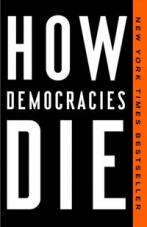
A vote that could be counted. A court or a movement that could survive being ignored. And a loser who, at least in Serbia, conceded. In How Democracies Die, Levitsky and Ziblatt argue that democracy depends less on written rules than on habits: accepting that your opponent is legitimate, and not using every power you hold. Vučić's concession is that habit. Flávio's call to annul is its absence. Brazil's institutions are what stand between that call and a repeat of 2022–2023. They've already convicted the former president, Flávio's father, of plotting a coup.
Israel and the US run on different machines
Israel votes Tuesday, October 27, for a 120-seat Knesset. Voters pick a party, not a prime minister. No party has ever won 61 seats outright, so the real contest starts after the vote: 28 days to build a coalition, extendable by 14, or the country votes again. Polls have Netanyahu's Likud and Gadi Eisenkot's new Yashar party evenly matched. About three million Palestinians in Gaza, the West Bank and East Jerusalem live under Israeli control and cannot vote in it. Brazil's result changes one thing: Flávio Bolsonaro had pledged to move Brazil's embassy to Jerusalem, and that pledge is dead. It doesn't change how a Knesset majority gets built.
The US on November 3 doesn't put the presidency on the ballot. All 435 House seats are up, plus 35 Senate seats and 39 governorships. A midterm can check a president. It can't replace one. Texas, Missouri and North Carolina redrew congressional maps mid-decade at Trump's urging; California answered with Proposition 50. In April the Supreme Court weakened parts of the Voting Rights Act in Louisiana v. Callais, and the New York Times estimated up to 12 House seats could shift as Southern states redraw. Our elections run through a patchwork of state officials. There's no national court running the show.
So why does it reach us at all?
Three ways, and a fourth that doesn't hold.
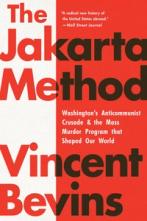
First, history. Brazil's last democracy ended in a 1964 coup that the US backed, and Vincent Bevins's The Jakarta Method tells that story as one chapter of a Cold War campaign. When Washington leans on Brazil again, the tariffs, the sanctions on a judge, the terror designations, it's repeating a habit.
Second, leverage. Trump didn't formally endorse Flávio, but he met him in the Oval Office and called Jair's prosecution a "witch hunt." Brazil denied him a close ally in Latin America's biggest economy. Serbia's Vučić called Trump a "kindred spirit" and lost too. The lesson isn't that Trump is finished. It's that outside pressure can't substitute for votes.
Third, a template. A specific grievance, a movement that could organize around it, and an election the incumbent couldn't fully rig. That's a pattern, not a prophecy.
What doesn't hold is the mechanical link. Trump isn't on the November ballot, and neither is a successor. A good night for Democrats would partly be ordinary midterm gravity, since a president's party usually loses seats. Brazil and Serbia are evidence of mood. They don't cause our result.
The pragmatist's read
If Democrats take the House, expect a brake: subpoenas, budget fights, oversight, a stop to some of the worst bills. That's worth fighting for. It isn't a reset, for the same reason Lula's win isn't one.
The part of Brazilian history I'd rather you read than any recap of the news is what came after the last dictatorship. Paulo Freire and Augusto Boal were both pushed out of Brazil by the military regime. Freire's Pedagogy of the Oppressed is a theory of how people learn to name their own situation. Boal's Theatre of the Oppressed turns that into rehearsal: you stage the fight before you need to have it. When Boal was elected to Rio's city council decades later, he used the same method to help citizens draft real laws. Neither one waited for an election to hand them a better country.
An election can change who holds the door. It can't build the house.
Related Reading
The Jakarta Method
Vincent Bevins
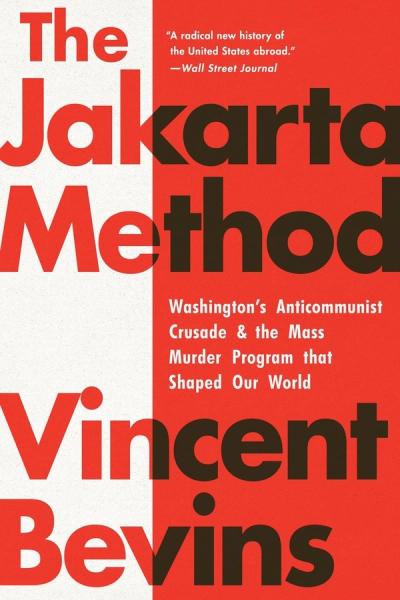
The empire’s darkest export.
✦ READ – REFLECT → RESIST
The Fall of Yugoslavia: The Third Balkan War
Misha Glenny
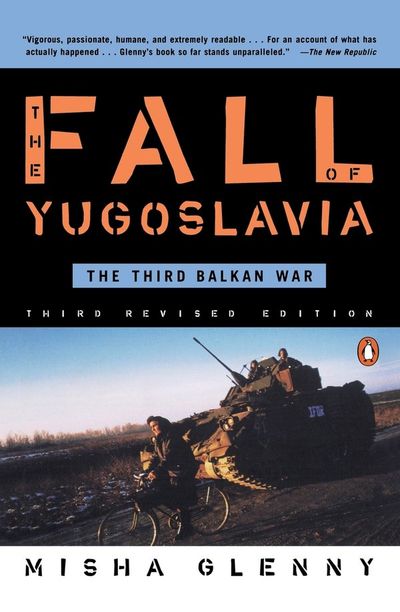
It happened in Europe. In your lifetime.
✦ READ – REFLECT → RESIST
The Bridge on the Drina
Ivo Andrić
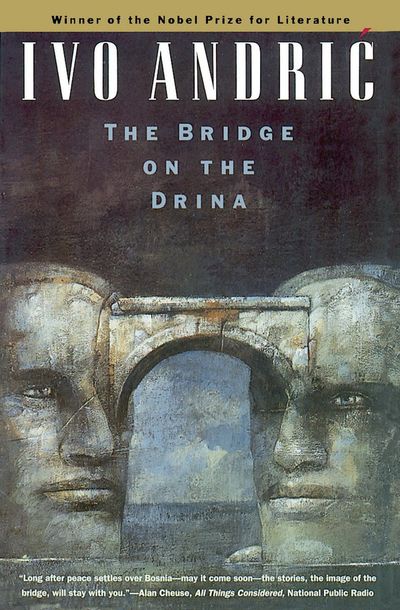
The bridge outlasted them all. Almost.
✦ READ – REFLECT → RESIST
How Democracies Die
Steven Levitsky & Daniel Ziblatt
Democracies don't die by coup anymore. Here's how they actually end.
✦ READ – REFLECT → RESIST
Pedagogy of the Oppressed
Paulo Freire
Classroom meets liberation front.
✦ READ – REFLECT → RESIST
Theatre of the Oppressed
Augusto Boal
Theatre as rehearsal for revolution. He was tortured for this.
✦ READ – REFLECT → RESIST