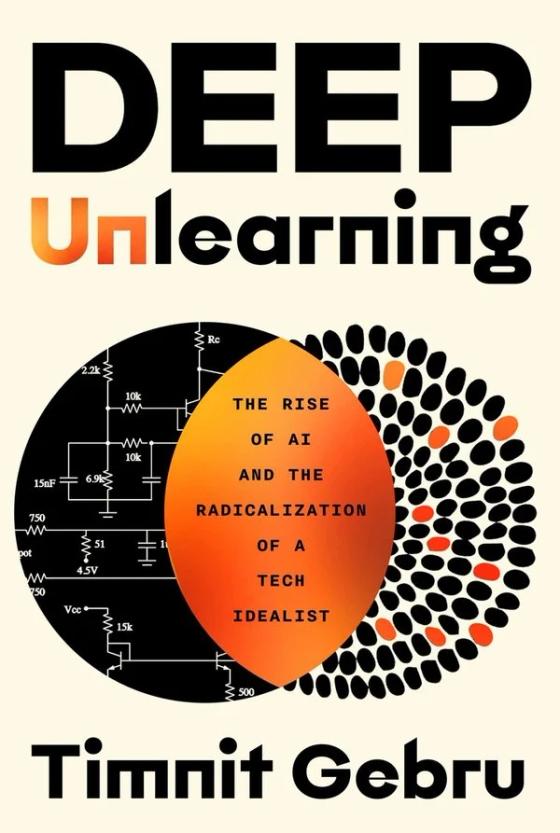
Deep Unlearning: The Rise of AI and the Radicalization of a Tech Idealist
by Timnit Gebru
What the AI boom chose not to tell you.
For you if
you have sensed that AI is not neutral and needed someone on the inside to prove it.
⚡ Choose Your Route ⚡
Not sold directly on this site. Support indie bookstores with a new copy, or go sustainable with a used one.
Buy New on Bookshop.orgSupports independent bookstores
— OR —
Find Used on Better World BooksSecondhand & sustainable
$28 MSRP · Hardcover
Reference price shown. Other editions may be available.
Timnit Gebru was fired from Google for writing a paper that said, plainly, that large language models are not what they claim to be. That firing is the center of this book — but what builds up to it, and what comes after, is the real story. This is a memoir about radicalization: how a refugee from the Ethiopian-Eritrean war found science as a refuge, rose to co-lead ethical AI at Google, and then discovered that the tech world she had believed in was making choices — deliberate, specific, accountable choices — that would harm billions of people. Gebru names those choices, names who made them, and argues they can still be unmade.
Where This Book Lives
Gebru was co-lead of ethical AI at Google until Google fired her for co-writing a paper arguing that large language models posed real risks. She has since founded DAIR, the Distributed Artificial Intelligence Research Institute. This book matters because it is not theoretical: it is a firsthand account of how the decisions that shaped modern AI were made, by whom, and what those choices cost the people the systems were not built to serve.
Related Viewing
Shares a topic, theme, or setting with this book in the catalog.

Blade Runner(1982)
dir. Ridley Scott
What makes one human when the answer keeps changing?
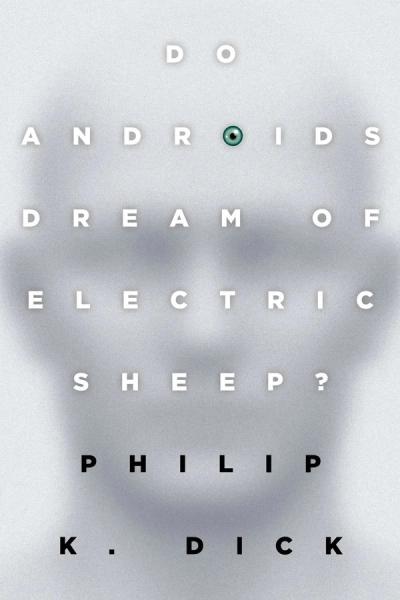
A burnt-out cop is pulled back into hunting fugitive "replicants" — bioengineered humans who have escaped off-world servitude and returned to Earth seeking their maker and a longer life. Adapted from Philip K. Dick's Do Androids Dream of Electric Sheep?
Why it’s here: Punk in its refusal to give the replicants a clean villain arc — Roy Batty's dying monologue is the film arguing that manufactured life grieves like real life. Pedagogical in how it trains you to distrust the neat categories — human/replicant, real/false memory — that power uses to sort who deserves rights.

Citizenfour(2014)
dir. Laura Poitras
Filmed in the room where the leak actually happened.
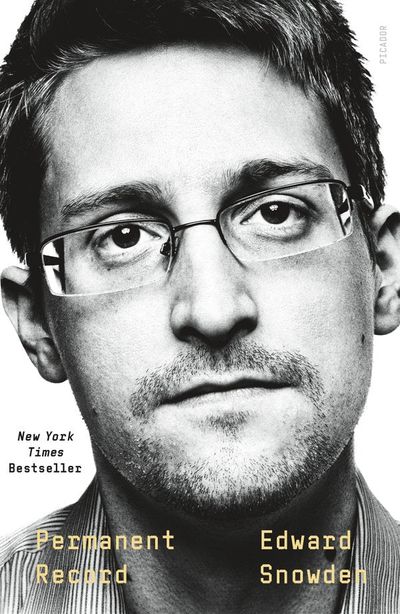
Laura Poitras films Edward Snowden's first meetings with journalists in a Hong Kong hotel room as he hands over evidence of mass NSA surveillance.
Why it’s here: Poitras was already filming when Snowden reached out, so this isn't reconstructed after the fact — it's the actual hotel room, the actual first read of the documents, tension that isn't staged because nobody knew yet how it would end.
Same event, different angle
The same history — told by someone who saw it differently.
Cutting for Stone
Abraham Verghese

Twin brothers, a mission hospital, one surgery.
✦ READ – REFLECT → RESIST
The Beautiful Things That Heaven Bears
Dinaw Mengestu

An Ethiopian refugee. A DC corner store. Change.
✦ READ – REFLECT → RESIST
How to Read the Air
Dinaw Mengestu

Reconstructing a father through his parents' journey.
✦ READ – REFLECT → RESIST
Same pattern, different era
Different time, different place. The same thing keeps happening.