




You Can Leave the Group and Keep the Script
Four books on cults and coercion, read in order, end up saying the same unsettling thing: leaving the group is the easy part. Keeping the script is what gets you.
Chrissie Muggeridge · October 14, 2026
Every cult story has a door scene. Someone packs a bag, or gets driven off a mountain, or finally says the sentence out loud. The bundle’s four books skip past the door fast. They’re about the part where you’re standing outside it with nothing to say.
See Through It: the machine has four parts
Steven Hassan was in the Unification Church before he was an expert on it. Combating Cult Mind Control is what he built from getting out, and its tool is the BITE model: Behavior, Information, Thought, Emotion. His claim is that a group that controls one of those four tends to end up controlling the rest. Decide where someone sleeps and whom they talk to, and what they’re allowed to read follows. What they’re allowed to feel follows that.
Use it as a lens, not scripture. Scholars have pushed back on the book for years, saying BITE leans on decades of existing social psychology and that Hassan’s terms like “mind control” are loose. The 2018 anniversary edition swaps many of those “mind control” phrases for “undue influence.” That’s a fair concession and the checklist still works. Run it on any group, including the ones you like. Who decides what you read? Who decides who you’re allowed to be angry at?
Feel the Fissure: nobody locked the door
Tara Westover was seventeen the first time she sat in a classroom. Her family lived in the mountains of Idaho, stockpiled food, and distrusted doctors. Educated is the BITE model with no compound and no guru. Nobody barred the school door, because there was no school to bar. Information control was just the weather.
What the book makes you feel is what each step costs. She taught herself enough to take the ACT, got into BYU, and ended up with a Cambridge PhD. Every one of those steps meant disagreeing with the people who had raised her, and when she named her brother’s violence, her family did not respond as one. Hassan gives you the structure. Westover shows you the bill: you can win the argument and still lose the table.
Laugh & Resist: the trap that isn’t a cult
Lauren Oyler’s Fake Accounts is not about a cult, and it’s here on purpose. The narrator is a blogger who finds her boyfriend’s secret Instagram account, where he promotes conspiracy theories he doesn’t seem to believe. Then he apparently dies, and she runs off to Berlin to try on personas of her own. The novel is funny, cold on purpose, and a lot of critics couldn’t decide whether to admire that or resent it.
This is where the bundle turns. After Hassan and Westover you can see how belief gets built. Oyler’s joke is that it doesn’t need a leader, a compound or a mountain. A phone and an audience will do. Felix’s belief is a performance, and so are the narrator’s. The laugh is distance, and distance is the first real escape from a script.
Oyler also won’t let distance off easy. A narrator who can’t believe anything isn’t free. She’s the same lonely person with better jokes. That matters for a bundle about leaving, because the usual exit from a group that demanded total belief is total irony. It feels like freedom, and it’s mostly just a different way of not being in the room.
Make Something Better: build a self without a script
Marlene Winell’s Leaving the Fold came out in 1993, and it’s a guide for people leaving authoritarian, dogmatic religion. She went on to name what many of them describe, religious trauma syndrome: the struggle of leaving behind the doctrine and, often, a whole meaningful community with it. Be straight about the status of the idea. It’s a young field with very little empirical research behind it so far. That’s a reason to read the book as a practitioner’s working guide and not a diagnosis, and it’s still the only book on this shelf that tells you what to do on Tuesday.
What she asks you to build is slow and unglamorous. You make a set of values you chose, and you get comfortable not knowing. You let other people be part of the answer without handing them the pen. It’s the only exit in the bundle that isn’t a script in disguise.
Why the order matters
Read these in a different order and each one gets worse. Hassan alone is a checklist that makes you suspicious of everyone. Westover alone is a tragedy. Oyler alone is a smirk. Winell first is a recovery plan for a wound you haven’t seen yet.
In order, they say one thing: the group was never the whole problem. Coercion works by handing you a script, and leaving only works if you learn to tell a script from a voice. That’s a problem for the politically awake parent in particular. The risk isn’t that your kid joins a cult. It’s that you build a house where only one script gets read aloud, even a good one.
The door is the easy part. The hard part is the first sentence you say that nobody handed you.
Related Reading
Combating Cult Mind Control
Steven Hassan
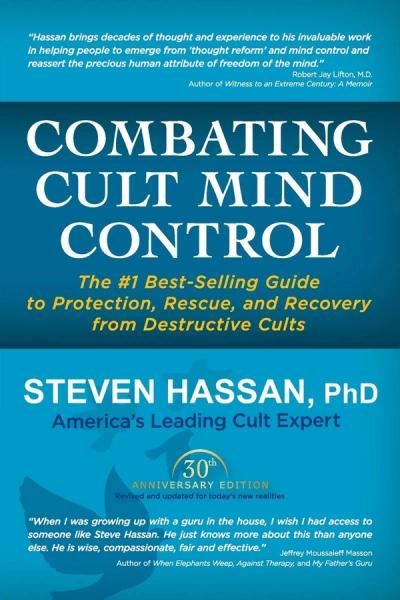
The BITE model. How coercive control works. In any group.
✦ READ – REFLECT → RESIST
Educated
Tara Westover

No school. No doctors. One mountain. She found her way out anyway.
✦ READ – REFLECT → RESIST
Fake Accounts
Lauren Oyler
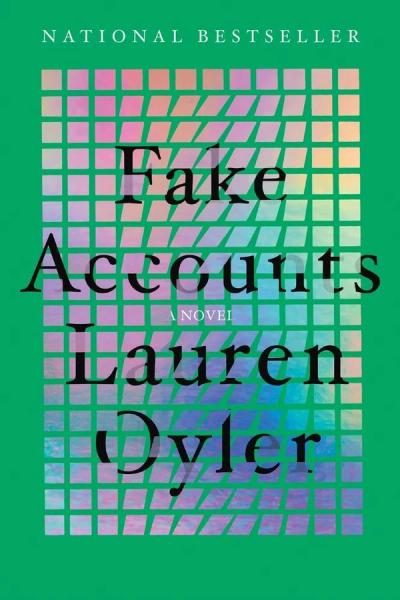
Her boyfriend was a conspiracy theorist. Then she became one too.
✦ READ – REFLECT → RESIST
Leaving the Fold
Marlene Winell
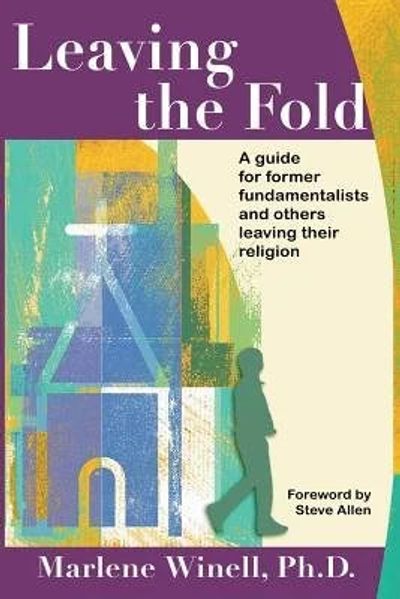
Religious Trauma Syndrome. She named it. Here's how to heal.
✦ READ – REFLECT → RESIST