Surveillance: The Right to Be Unseen
Who watches. Who's watched. What it costs — and the cities that just said no.
Somewhere right now, a camera is reading your license plate. Not because you did anything wrong. Because a company called Flock Safety sold the technology, a city council approved the contract, and nobody asked you. The cameras multiply. The data compounds. Thirty-plus cities eventually said no — after federal immigration agents started accessing that data without permission. The question is why it took that long. And who's still saying yes.
Bruce Schneier's Data and Goliath maps the full architecture of the surveillance economy — how your data is collected, stored, bought, and weaponized, and why "nothing to hide" is a lie designed to make you stop asking. He wrote it before Flock Safety became a household name. The systems he describes are what made it possible. Then Virginia Eubanks names what the abstract surveillance debate always skips: it's not neutral. In Automating Inequality, she follows the families most surveilled — those who interact with welfare systems, child services, homeless services — and shows that the cameras don't bother equally. They watch the poor. They target the marginalized. They're never in every neighborhood.
Kashmir Hill spent years watching a startup convince law enforcement that a database of 30 billion faces — scraped from the internet without anyone's consent — was just a tool. Your Face Belongs to Us is the most infuriating, most darkly funny book on this list, because sometimes the most honest response to naked audacity is to name it clearly and laugh. This is resistance through exposure: the surveillance empire doesn't survive scrutiny. That's why it's always counted on you not paying attention.
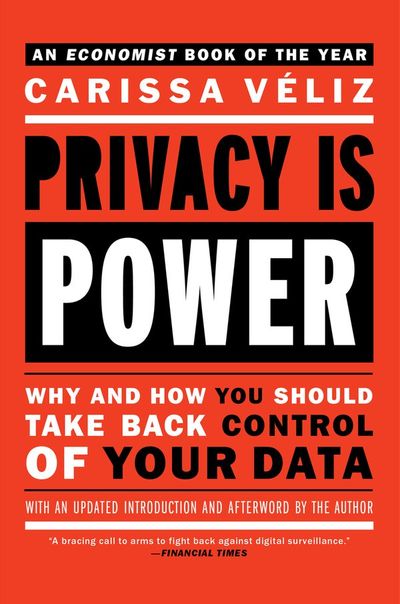
Carissa Véliz is a philosopher, not an activist, and Privacy is Power reads like both. She doesn't tell you to quit your phone or move off the grid. She tells you that privacy is political — a collective good, not a personal quirk — and that the solution is structural: law, design, collective action. The same collective action that got Flock cameras cut down in some cities, and contracts canceled in dozens more. The surveillance state survives because we've been convinced it's inevitable. It's not.
SEE THROUGH IT
Data and Goliath
Bruce Schneier
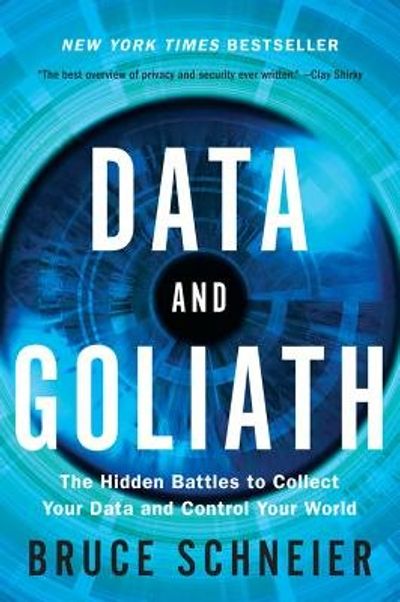
The hidden war over your data — and who's winning.
✦ READ – REFLECT → RESIST
FEEL THE FISSURE
Automating Inequality
Virginia Eubanks
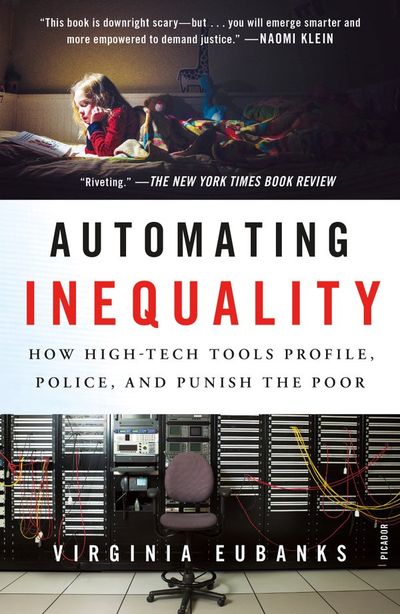
When algorithms become the new welfare office.
✦ READ – REFLECT → RESIST
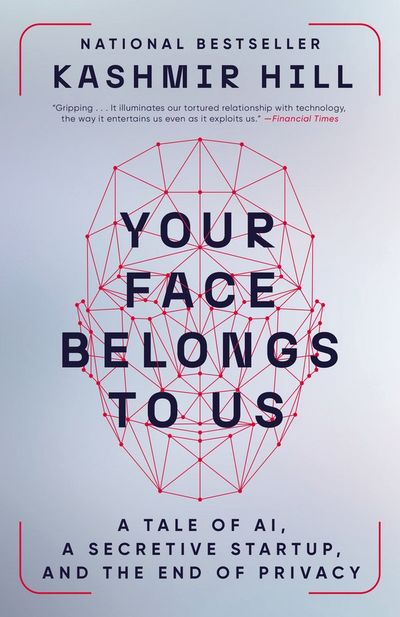
Raise the Future
Department of Childish Revolution
For the adults raising the future:

The Right to Be Unseen
Kids are being tracked before they're old enough to consent — school surveillance software, app permissions, cameras at every intersection. The infrastructure of observation is already built into their world. These books don't teach fear. They teach children that their thoughts, their movements, and their private spaces belong to them — and that some things are worth protecting.
Your space. Your rules.
→ Explore the DoCR Collection