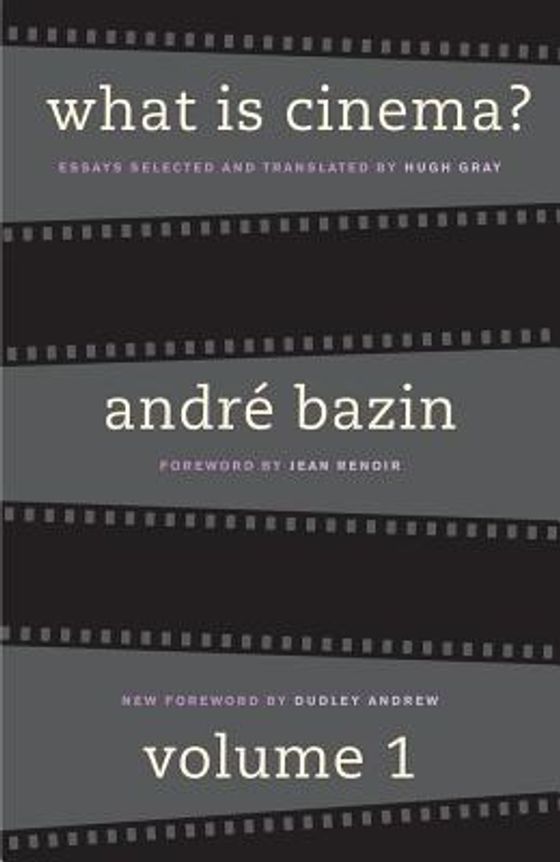
What Is Cinema?
by André Bazin
Cinema’s soul, under the microscope.
For you if
you want to understand why formal choices in filmmaking are also ethical and political choices — from the critic who first made that argument rigorously
⚡ Choose Your Route ⚡
Not sold directly on this site. Support indie bookstores with a new copy, or go sustainable with a used one.
Buy New on Bookshop.orgSupports independent bookstores
— OR —
Find Used on Better World BooksSecondhand & sustainable
$36 MSRP
Reference price shown. Other editions may be available.
Bazin's central argument is deceptively simple and permanently unsettling: cinema has an ontological relationship to reality that no other art form possesses. The photograph — and by extension the film — is not a representation of the world but an impression of it, a trace of light that actually touched the thing being recorded. This means that every formal choice a filmmaker makes — the cut, the close-up, the long take, the deep focus shot — is not just aesthetic but ethical, a claim about how reality should be rendered and who has the right to interpret it. Bazin co-founded Cahiers du Cinéma and mentored the French New Wave directors who turned his theory into practice. His championing of Italian Neorealism — films made in the streets with non-professional actors about the actual lives of working-class people — is the direct ancestor of every documentary, every community filmmaking project, every DoCR workshop that hands a camera to a child and says: your reality is worth recording. The foundational text of film literacy as a political practice. Read alongside Brecht on Theatre and the two books together are the complete theoretical foundation of what DoCR is building.
Where This Book Lives
- Themes
- film theory
Same event, different angle
The same history — told by someone who saw it differently.
Same pattern, different era
Different time, different place. The same thing keeps happening.