
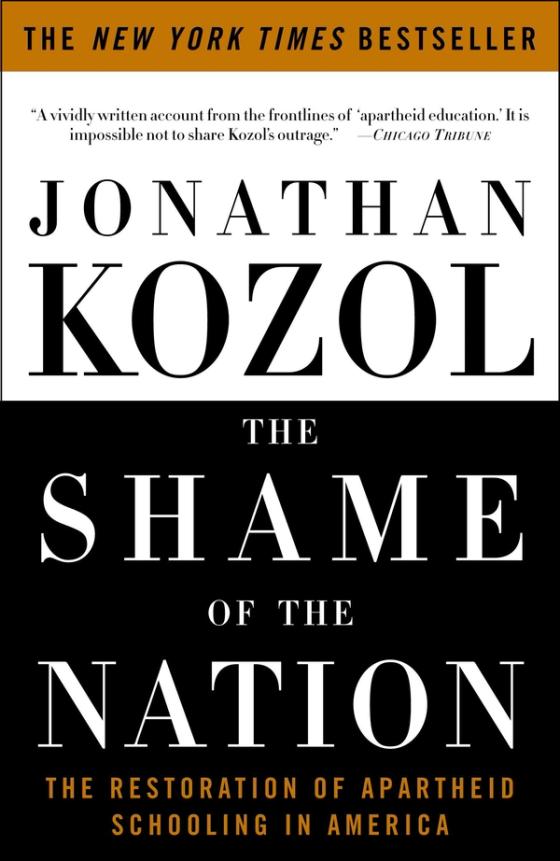
The Shame of the Nation
by Jonathan Kozol
Brown v. Board was sixty years ago. Schools are more segregated now.
For you if
you want to understand what school segregation looks like in America right now — not in 1954 but today
⚡ Choose Your Route ⚡
Not sold directly on this site. Support indie bookstores with a new copy, or go sustainable with a used one.
Buy New on Bookshop.orgSupports independent bookstores
— OR —
Find Used on Better World BooksSecondhand & sustainable
$18 MSRP
Reference price shown. Other editions may be available.
Sixty years after Brown v. Board of Education, Kozol visited public schools across America and found them more segregated than they were in 1954 — not by law but by geography, by funding formulas, by the quiet mechanisms of a society that decided integration was too inconvenient to complete. He sat in kindergarten classrooms in the South Bronx where children were being drilled in rote responses and walked through corridors peeling with mold. He sat in suburban classrooms an hour away where children had swimming pools and pottery studios. The same country. The same constitutional guarantee. Kozol had been documenting this for forty years — Death at an Early Age, Savage Inequalities — and this is his most complete reckoning. The grief in it is enormous and earned. The most important book about American educational inequality ever written.
Where This Book Lives
Part of a Reading Journey




Related Viewing
Shares a topic, theme, or setting with this book in the catalog.

Most Likely to Succeed(2015)
dir. Greg Whiteley
The best case for project-based learning, with caveats.
A year inside High Tech High, a San Diego charter school built entirely around project-based learning instead of standardized instruction, following two classes of ninth graders.
Why it’s here: Makes the most vivid case in documentary form for project-based learning over the standard model — but its history of how American schooling got this way has been disputed by actual education historians, and its producers have their own stake in the reform it's arguing for. Worth watching with that critique alongside it, not instead of it.
Same pattern, different era
Different time, different place. The same thing keeps happening.