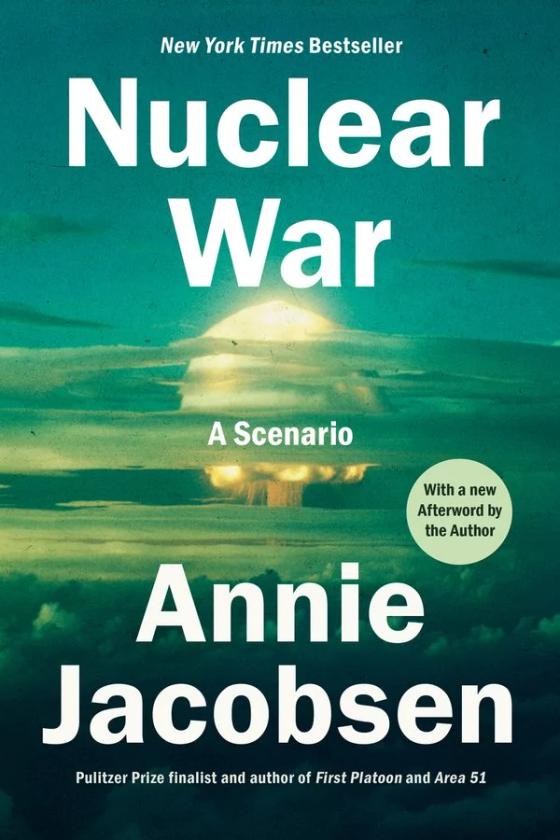
Nuclear War: A Scenario
by Annie Jacobsen
72 minutes to the end of everything.
For you if
you've been carrying a low-grade nuclear dread and needed someone to just say it out loud.
⚡ Choose Your Route ⚡
Not sold directly on this site. Support indie bookstores with a new copy, or go sustainable with a used one.
Buy New on Bookshop.orgSupports independent bookstores
— OR —
Find Used on Better World BooksSecondhand & sustainable
$20 MSRP · Paperback
Reference price shown. Other editions may be available.
This is the book that makes nuclear war feel real instead of theoretical — Jacobsen traces a single North Korean missile launch through 72 minutes of decision cascades, chain reactions, and civilizational collapse until roughly five billion people are dead. She spent fifteen years interviewing 47 people who designed these weapons and planned how to use them, so the scenario is not invented — it is extrapolated from the actual architecture of deterrence. By the end you will not be abstractly worried about nuclear war; you will understand exactly how it happens, why the current system makes it nearly inevitable given enough time, and why no president has had a good option since Eisenhower. The case is not hopeless — but it requires seeing the thing clearly first.
Where This Book Lives
- Themes
- apocalypse
- Topics
- cold warnorth korea
This book will upset you — that is the point. Jacobsen's argument is that nuclear war feels abstract because we have been allowed not to know how it actually works, and that ignorance is precisely the condition that makes it possible. Worth noting: Lawrence Freedman, one of the world's foremost nuclear policy scholars, reviewed this in Foreign Affairs and found the scenario overheated in places — some communication breakdowns don't hold up under scrutiny. That's a real critique, not a dismissal; the book's essential argument — that the current system is a time-limit problem, not a solved one — remains standing.
Related Viewing
Shares a topic, theme, or setting with this book in the catalog.
Dr. Strangelove or: How I Learned to Stop Worrying and Love the Bomb(1964)
dir. Stanley Kubrick
Laughing so you don't scream, since 1964.
A rogue Air Force general triggers an unrecallable nuclear strike on the USSR, and the War Room scrambles — bureaucratically, absurdly — to stop the end of the world.
Why it’s here: The original 'laugh so you don't scream' text — mutually assured destruction played entirely for farce, and the farce is the argument: absurdity is what nuclear brinkmanship actually looks like from the inside.
The End(2024)
dir. Joshua Oppenheimer
The last family on Earth won't face what they did.
Twenty-five years after environmental collapse, a wealthy family lives on in a luxurious bunker inside a salt mine, singing their way through carefully preserved routines — until a mysterious girl arrives and shakes the foundations of the life they've built.
Why it’s here: Punk in using a lush musical to interrogate the comfortable denial of a family who survived the collapse — the bunker is denial with good furniture. Pedagogical in showing how wealth and routine let a people sing their way around what happened, until an outsider arrives who won't play along.
Same event, different angle
The same history — told by someone who saw it differently.
Cat's Cradle
Kurt Vonnegut
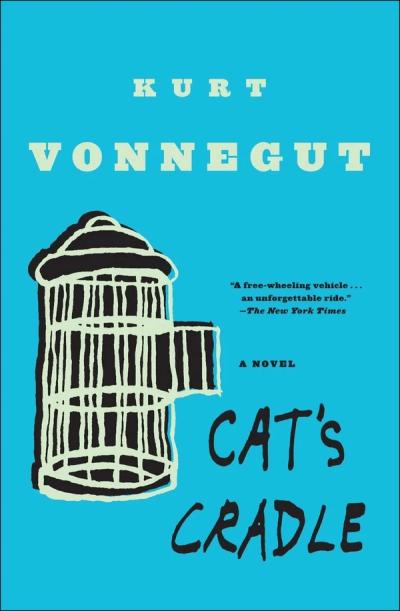
A religion built on lies. A substance that ends the world. Both feel true.
✦ READ – REFLECT → RESIST
This Is Not Propaganda: Adventures in the War Against Reality
Peter Pomerantsev
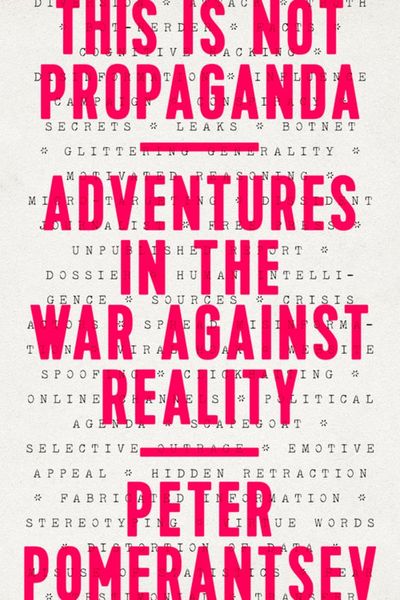
When truth is a weapon, here's how to use it.
✦ READ – REFLECT → RESIST
Autocracy, Inc.: The Dictators Who Want to Run the World
Anne Applebaum
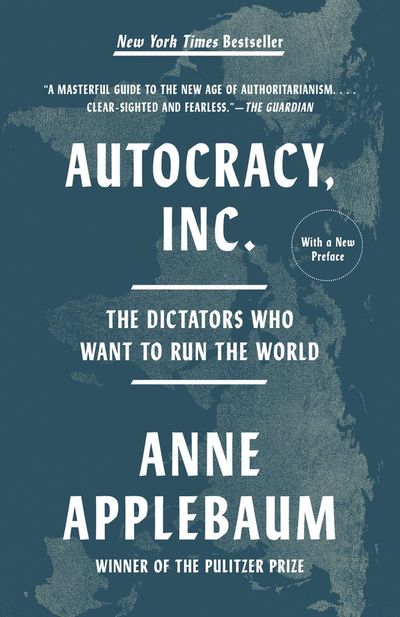
The network behind every strongman.
✦ READ – REFLECT → RESIST
The Jakarta Method
Vincent Bevins
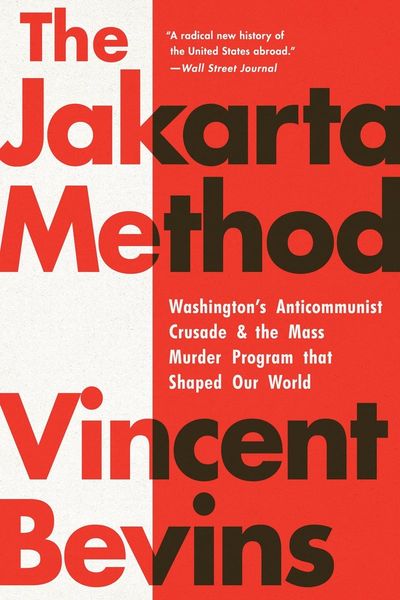
The empire’s darkest export.
✦ READ – REFLECT → RESIST
Same pattern, different era
Different time, different place. The same thing keeps happening.
End Times Fascism: And the Fight for the Living World
Naomi Klein and Astra Taylor
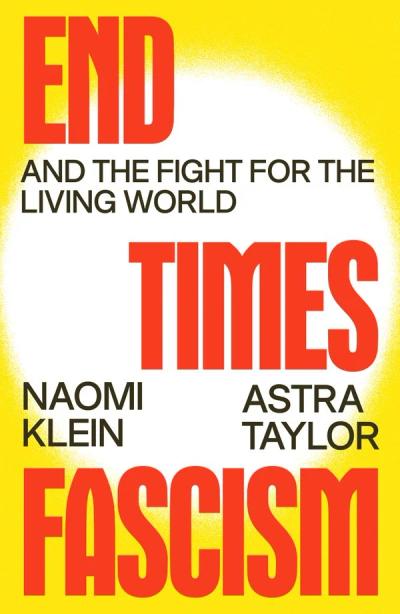
Apocalypse as political strategy.
✦ READ – REFLECT → RESIST
Good Omens
Neil Gaiman & Terry Pratchett
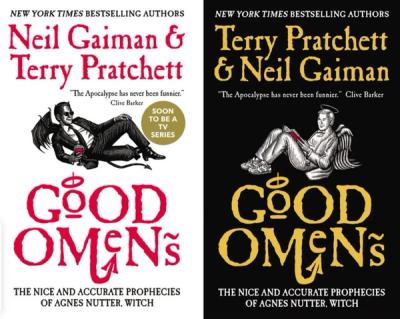
Apocalypse with eyeliner and tea.
✦ READ – REFLECT → RESIST
Cat's Cradle
Kurt Vonnegut
A religion built on lies. A substance that ends the world. Both feel true.
✦ READ – REFLECT → RESIST