
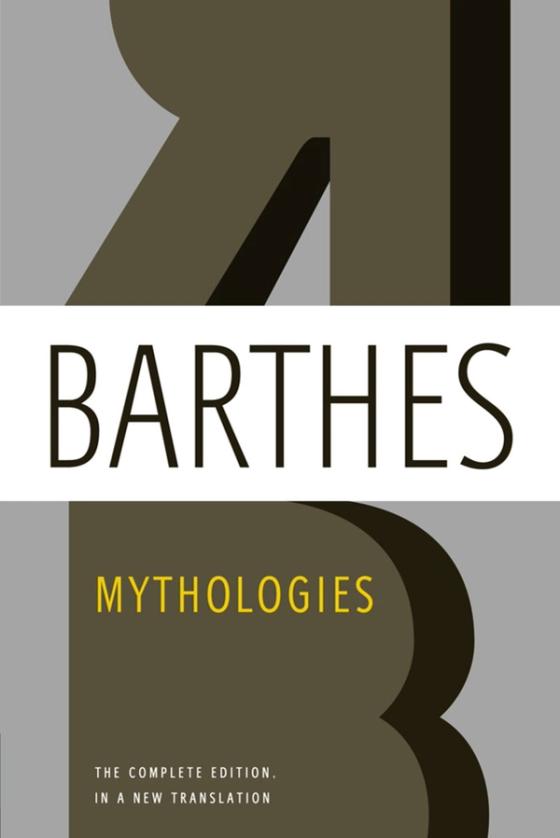
Mythologies
by Roland Barthes
Steak. Wrestling. Detergent ads. All of them are lying to you.
For you if
you want a tool for reading the ideological messages hidden inside everyday objects and images — and want it to be genuinely entertaining
⚡ Choose Your Route ⚡
Not sold directly on this site. Support indie bookstores with a new copy, or go sustainable with a used one.
Find Used on Better World BooksSecondhand & sustainable
$18 MSRP
Reference price shown. Other editions may be available.
Barthes spent two years writing short essays about French everyday life — wrestling, steak and chips, the face of Garbo, the new Citroën, Billy Graham, detergent advertisements — and discovered that each one was doing the same ideological work: presenting something historically constructed and politically motivated as natural, inevitable, and obvious. Myth, in Barthes's usage, is not a fairy tale but the mechanism by which history disguises itself as nature. The most accessible and entertaining introduction to semiotics ever written. Semiotics in Barthes's hands is not an academic exercise but a practical tool for reading the world. After you read this book you cannot look at an advertisement, a news photograph, a restaurant menu, or a film poster without seeing what it is actually saying underneath what it appears to be saying. Directly relevant to Punk & Pedagogy's Department of Childish Revolution: every child who makes an image needs to understand that images are never innocent. Pairs with Society of the Spectacle as the theoretical framework and Against Interpretation as the productive tension: Debord says the spectacle controls us, Barthes shows you how to read it, Sontag says don't just read it, feel it first.
Where This Book Lives
Related Viewing
Shares a topic, theme, or setting with this book in the catalog.
Miss Representation(2011)
dir. Jennifer Siebel Newsom
Media's role in shrinking what power looks like.
Interviews with journalists, politicians, and media figures examine how narrow media portrayals of women connect to their underrepresentation in positions of power.
Why it’s here: Assembles an unusually wide range of women across politics, journalism, and entertainment to make one plain argument: the narrowness of how women get shown is not incidental to how few end up in power. Direct and unfussy, built to be shown and discussed, not just watched.
Network(1976)
dir. Sidney Lumet
An anchor's breakdown, monetized live on air.
A veteran news anchor's on-air breakdown becomes a ratings sensation, and the network that employs him decides to exploit it rather than stop it.
Why it’s here: Predicted the entire attention economy fifty years early — outrage as content, a network cashing in on a man's collapse in real time. Nothing about it reads as dated; if anything it reads like a documentary that arrived too soon.
Same pattern, different era
Different time, different place. The same thing keeps happening.
The Daily Show (The Book)
Chris Smith & Jon Stewart

Fake news before it was cool.
✦ READ – REFLECT → RESIST
America (The Book)
Jon Stewart & The Daily Show Writers
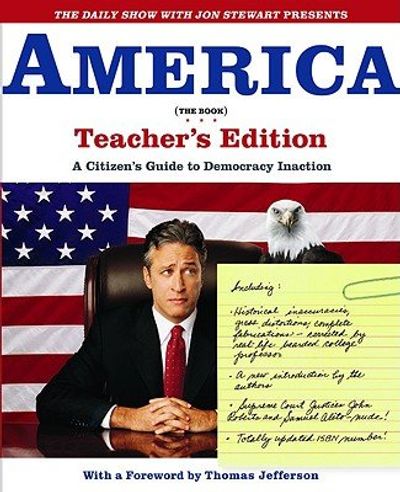
A fake civics textbook. More accurate than the real one.
✦ READ – REFLECT → RESIST
Society of the Spectacle
Guy Debord
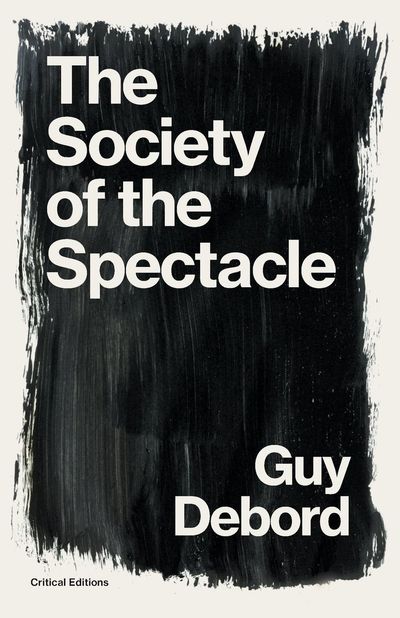
Life replaced by its image. Capitalism profits from watching.
✦ READ – REFLECT → RESIST